
Above + Within · Engineer-led roof diagnostics
Drone Roof Inspection Melbourne
The stain is not the source. We help you find the water.
High-resolution drone imaging and thermal leak detection for homes, commercial roofs and strata buildings, with no ladders, no harnesses and no one walking on your roof. Every report is reviewed by a Registered Professional Engineer.
Why roof leaks are hard to find
The leak is rarely where the stain is.
Water gets in at one point, then travels along battens, sarking and insulation before it shows up on a ceiling, sometimes metres away. Patch the stain and the leak comes back. Walk the roof to find it and you risk cracked tiles, dented sheeting and a fall from height.
Patch the stain and the leak comes back. The fix belongs at the entry point, and that is what we look for.
Illustration
Many roof inspections can only cover what someone can safely reach and see.
How it works
Fly. Scan. Report.
Step 1 · Above
Fly the whole roof
A licensed drone is designed to capture the roof’s tiles, sheets, valleys, gutters, flashings and penetrations in high resolution, including areas that are hard to reach safely.
Step 2 · Within
Scan for what's hidden
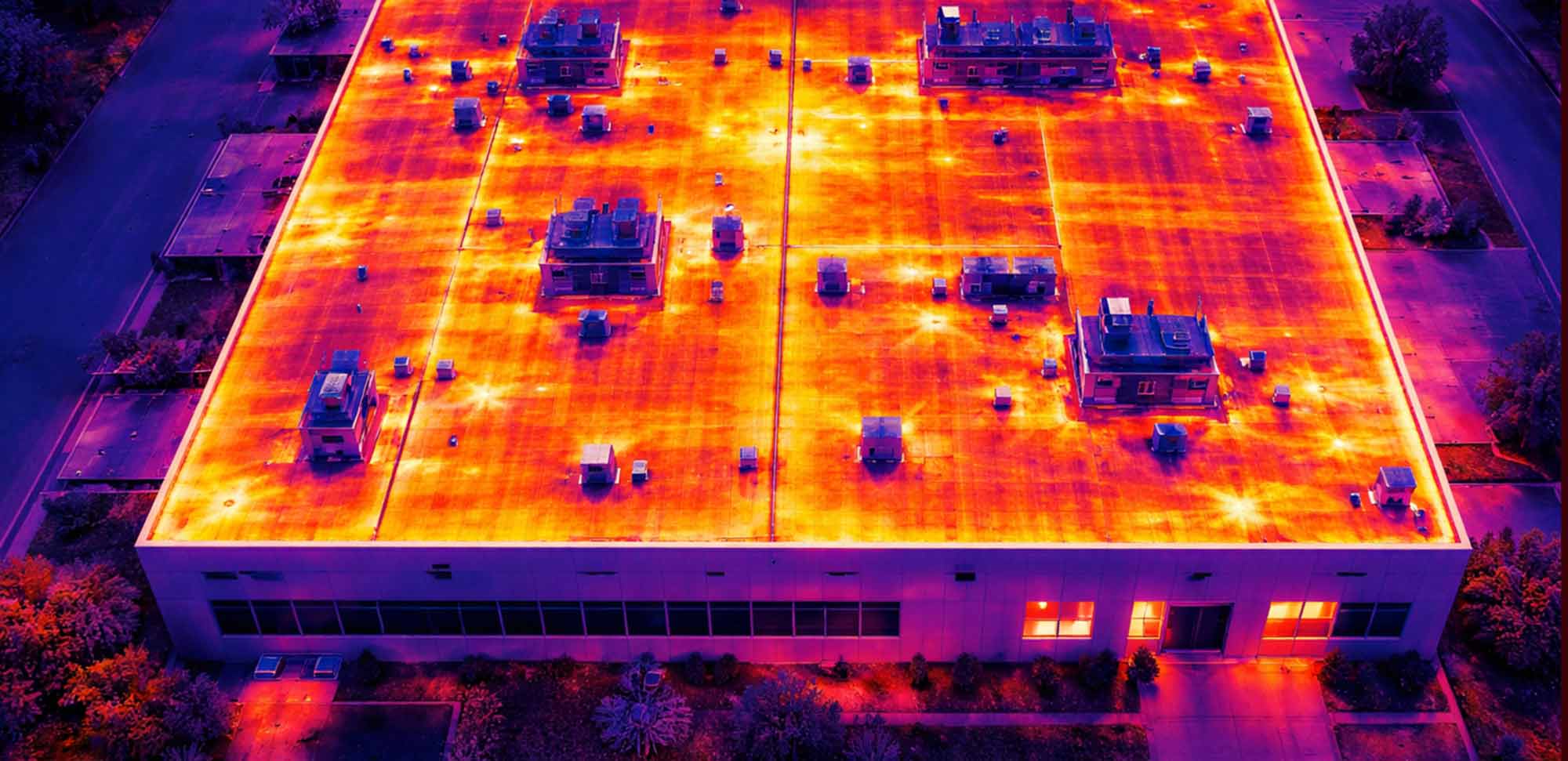
Thermal imaging can indicate where moisture may be sitting under the surface and where insulation may be gapped, settled or missing. For leak detection we fly in the evening after a sunny day, when wet areas hold heat longer than dry ones.
Step 3 · Report
Engineer-reviewed report
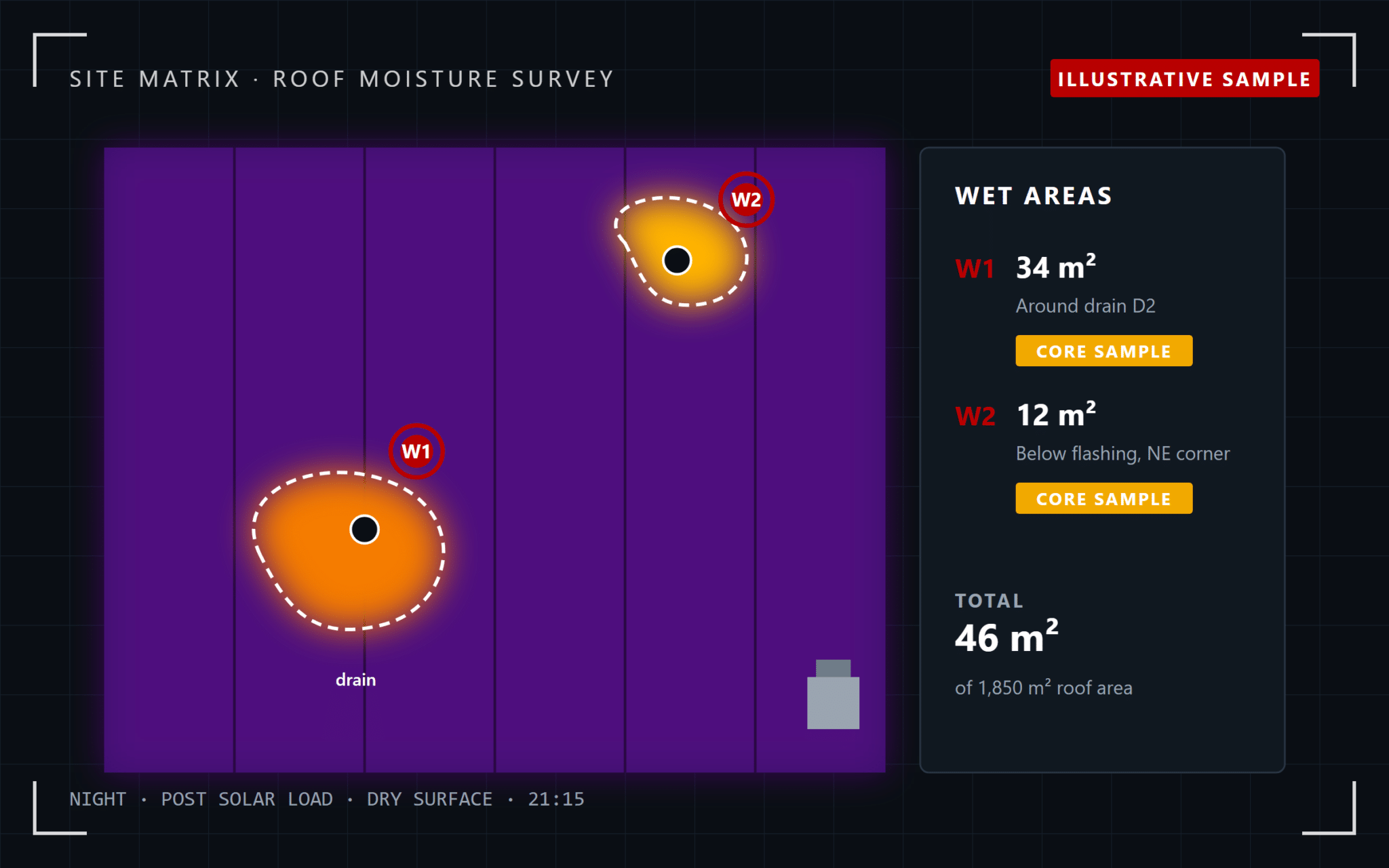
Marked-up photos, a thermal map of suspected wet and under-insulated areas, likely entry points, priority ratings and clear next steps for your roofer or plumber.
Seeing the unseen
Same roof. Two very different stories.
Drag the slider. The daylight image shows the tiles; the thermal pass can reveal where water may be.
Drag to compare. From the street this roof looks fine. On an evening thermal pass, the water sitting below one slipped tile shows up as a warm patch spreading down the roof.
Illustration
What the report shows
Every finding, located and prioritised.
Hover or tap a card to see what each finding looks like and why it matters.
Cracked, slipped or missing tiles
Cracked, slipped or missing tiles
Visible gaps and displaced tiles in the aerial images
Why it matters
The most common entry point for water
Failed flashing & ridge capping
Failed flashing & ridge capping
Lifted, cracked or rusted flashing; loose or broken bedding and pointing
Why it matters
Water enters at joints and runs along the roof frame
Rust & damaged sheeting
Rust & damaged sheeting
Corrosion, holes, lifted screws and dents on metal roofs
Why it matters
Small holes become big leaks quickly
Blocked gutters & valleys
Blocked gutters & valleys
Debris, ponding and overflow paths
Why it matters
Water backs up under the roof edge
Trapped moisture
Trapped moisture
Warmer patches on the thermal map after dark
Why it matters
Shows where water is sitting, not just where it appears
Insulation gaps
Insulation gaps
Uneven heat patterns across the ceiling space
Why it matters
Higher energy bills and condensation risk
Storm damage
Storm damage
Lifted or missing sheets, impact damage
Why it matters
Dated evidence for insurance claims
Not sure what you've got?
Not sure what you've got?
Who we work with
One roof scan. Four kinds of answer.
Homeowners
Find out what's wrong before you pay for repairs, and know which quote you actually need.
Building inspectors
Add a full roof assessment to your inspection without climbing. We fly, you report, and the roof stays in scope even when it isn't safe to access.
Roofers & roof plumbers
See the whole roof before you quote and show clients the evidence. Fewer wasted site visits, fewer disputes.
Strata, commercial & asset owners
A dated, documented condition record for maintenance planning, insurance and handover, across one building or a whole portfolio.
See what you get
A report your roofer can act on.
Every report is reviewed by an engineer, and typically includes:
- An overview of the whole roof
- Marked-up photos of each defect
- A thermal map of suspected moisture and insulation problems
- Priority ratings for every finding
- Plain-English recommendations for your roofer or plumber
Fixed prices, no surprises
Know the cost before we fly.
Roof Scan
From $350
- Drone inspection of the whole roof
- Gutters and flashings
- Marked-up photo report
Roof Health Check
From $700
- Everything in Roof Scan
- Thermal leak and insulation scan
- Engineer commentary
Commercial Roof Assessment
From $900
- Commercial or strata roofs
- Defect register and priority ratings
- Optional 3D model
Trade Partner rate
From $300
- For building inspectors, roofers and roof plumbers
- White-label report available
Final price depends on roof size, height, access and location. You’ll get a fixed written quote usually within 2 business days.
Engineering-led, not just a drone operator
Anyone can fly a drone. Interpreting what it sees is the job.
Registered Professional Engineer oversight
22+ years in building services engineering, with every report reviewed before it reaches you.
Certified thermography
Infraspection Institute Level 2, so thermal findings are interpreted by a trained thermographer.
Licensed and insured
CASA ReOC 9692, flown by a licensed remote pilot, with public liability insurance.
Honest about limits
Where thermal suggests moisture, we tell you how to confirm it, rather than presenting a guess as a fact.
Dated, geo-tagged evidence
Every image is dated and geo-tagged, so the report can help support insurance claims, disputes and handover.
Diagnosis first
Our inspection is quoted separately from any repair, so you can take the report to any contractor. If you’d like, we can recommend a trade partner.
Where we fly
Melbourne and across Victoria.
FAQ
Questions we're asked about roof inspections.
How much does a drone roof inspection cost in Melbourne?
A residential Roof Scan starts from $350, and the Roof Health Check with thermal leak detection starts from $700. Commercial roofs are quoted on size and access. You'll get a fixed written quote usually within 2 business days.
Do you need to get on my roof?
No. Everything is captured from the air, so no one walks on your tiles or sheeting.
Can a drone find where my roof is leaking?
Often, yes. Thermal imaging shows where water is sitting in the roof, which usually points to the entry area rather than just where the stain appears. Some leaks, such as those that only show in heavy rain or from one wind direction, may need a follow-up check.
When do you do thermal leak scans?
Usually in the evening after a dry, sunny day, when wet areas hold heat longer than dry ones. We'll pick the best time for your roof type and the weather.
How long does it take?
A typical home usually takes about 30–60 minutes on site. Your report typically follows within 2–3 business days.
Is the report suitable for insurance claims or disputes?
Yes. Images are dated and geo-tagged, and the report is engineer-reviewed. The final decision always rests with your insurer.
Will you fix the leak?
Our inspection is quoted separately from any repairs, so you can use any contractor you choose. If you need a roofer or plumber, we can refer you to one of our trade partners.
Are you licensed and insured?
Yes. Site Matrix holds CASA ReOC 9692 and carries public liability insurance.
Stop patching stains.
Find the source.
Tell us about your roof and we’ll send a fixed quote usually within 2 business days.
Get a fixed quote
Tell us about the roof and what you’re seeing. A fixed written quote follows usually within 2 business days.
Explore more
Related Services
Pairs well with: Residential Drone Services · Thermography for Roofs & Facades · Insurance Assessment