
Thermography · Roofs & Facades
The stain is not the source. We help you find the water.
By the time a roof leak shows up inside, water has often been spreading through the insulation for months – and it rarely appears directly below the point where it got in.
Find the water before the damage
Find wet roof insulation before the next leak does.
By the time a roof leak shows up inside, water has often been spreading through the insulation for months — and it rarely appears directly below the point where it got in.
A thermal roof survey maps where the insulation appears to be wet, so repairs can target the damage instead of replacing the whole roof.
Drag to compare. A roof that looks fine from the surface – and the wet insulation a night-time thermal scan reveals, spreading from a failed flashing.
Illustration
The problem: water travels
The stain is not the source.
Water that gets past a failed flashing or membrane spreads through the insulation layer before it drips through. Visual inspections see the surface; they can’t see how far the moisture has travelled underneath — so repairs either miss the damage or replace far more roof than needed.
Thermography maps the whole wet area – so you repair the source and the damage, not just the stain.
How it works
The physics that makes wet insulation visible
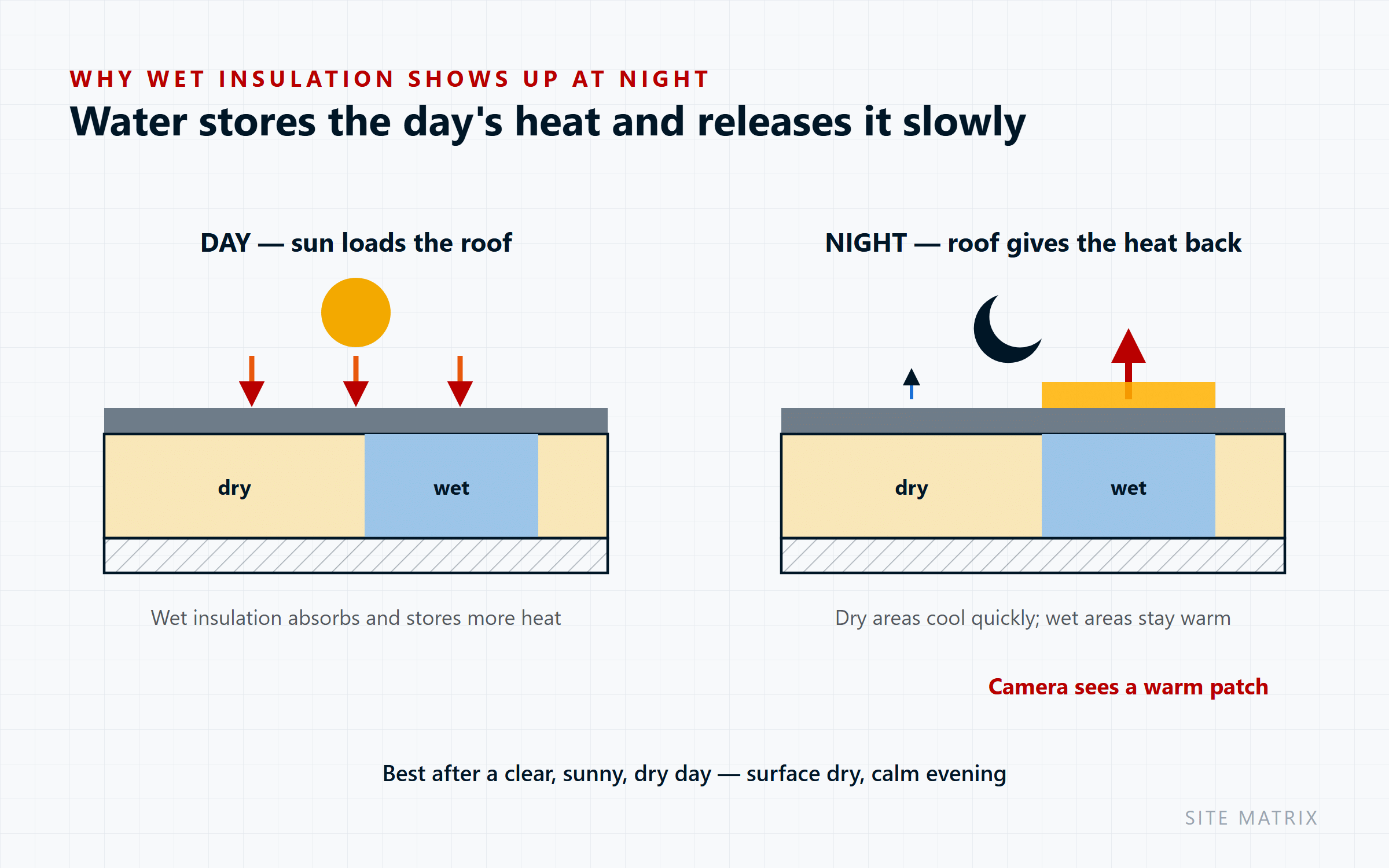
Wet insulation holds far more heat than dry insulation. After a sunny day the whole roof warms up — but at night the dry areas cool quickly while wet areas stay warm, and show up clearly on camera.
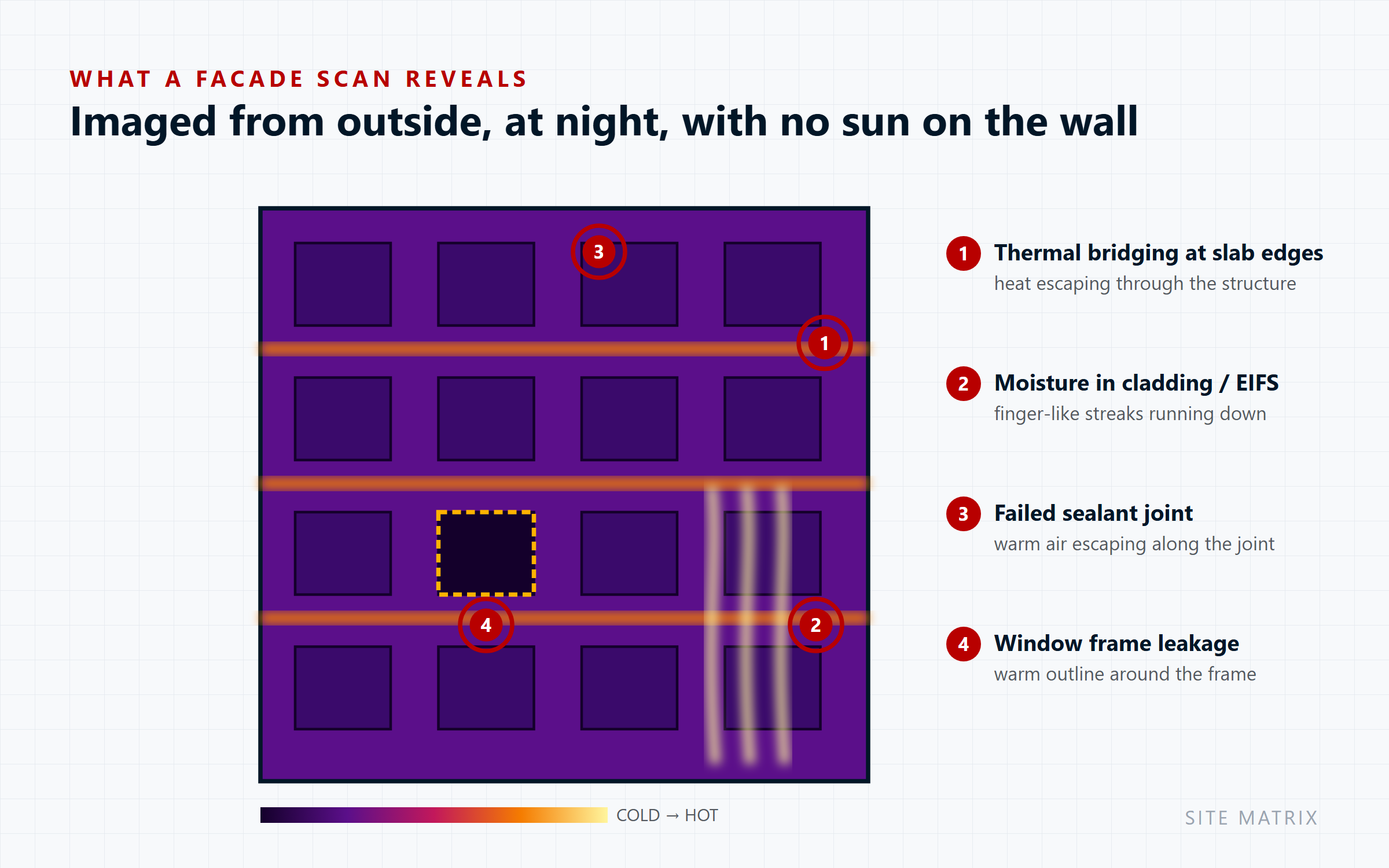
Facade scans are done from outside at night, with no sun on the wall. They reveal moisture in cladding, failed sealant joints, leaking window frames and heat escaping at slab edges.
Thermography closes that gap
A non-destructive survey that maps likely wet areas across the roof — in a single evening.
How we solve it
Scan. Confirm. Measure.
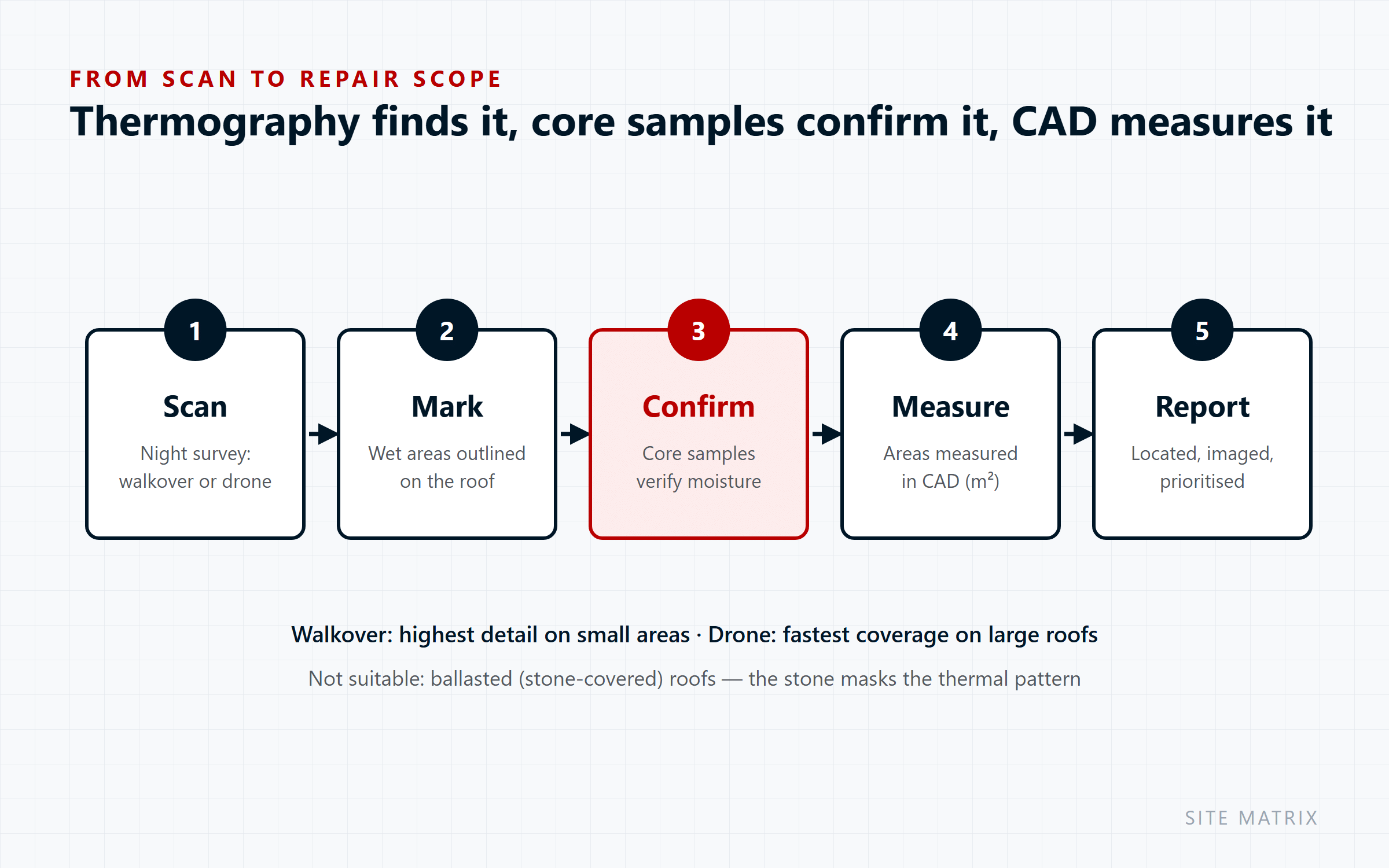
Scan
Night survey after
a sunny, dry day
Walkover for detail, or drone for fast coverage on large roofs
Confirm
Wet areas marked
and core-sampled
Thermal findings verified before any repair is scoped
Measure & report
Areas measured
in CAD (m²)
A located, imaged report your roofer can price and repair from
What we deliver
Roof and facade thermography
What the data shows
What we find on roofs and facades
| Finding | What it looks like and why it matters |
|---|---|
| Wet roof insulation | Warm patches at night after a sunny day — lost insulation value and a leak that will keep spreading |
| Failing flashings | Moisture concentrated at upstands, edges and penetrations — one of the most common causes of roof leaks |
| Moisture near drains | Wet areas around outlets and gutters — often from blocked or poorly sealed drainage |
| Moisture in cladding / EIFS | Streaks running downward on the facade — energy loss, mould and structural risk |
| Failed sealant joints | Warm lines along joints (air escaping) or cold lines (water tracking in) |
| Thermal bridging | Warm bands at slab edges and structural connections — heat bypassing the insulation |
Why it matters
Repair the damage, not the whole roof
Targeted repairs
Replace only the wet areas instead of re-roofing on a guess.
Whole-roof coverage
The whole accessible roof surveyed — not just the areas someone walked past.
Plan maintenance
Annual surveys track the roof’s condition and catch new leaks early.
Evidence for claims
Located, dated, measured findings for insurers, warranties and disputes.
Who we work with
For everyone responsible for the building envelope
Asset owners & strata managers
Roofing & facade contractors
Insurers & loss adjusters
A wet roof only gets worse. Map it now and repair the damage before it spreads.
Your questions answered
Frequently Asked Questions
Why are roof surveys done at night?
Wet insulation stores heat during the day and releases it slowly. At night, dry areas cool quickly and wet areas stay warm — that contrast is what the camera detects.
Can every roof be surveyed?
Most membrane, bitumen and insulated metal roofs can. Ballasted roofs (covered in stone) usually can’t, because the stone masks the thermal pattern. The roof surface also needs to be dry.
Walkover or drone — which is better?
A walkover with a handheld camera gives the most detail and picks up small wet areas. A drone covers large or hard-to-access roofs quickly. We often combine the two.
Do you confirm the findings?
Yes. Thermal findings are marked out and confirmed with core samples before a repair is scoped, so you only pay to fix what is actually wet.
How often should a roof be surveyed?
An annual survey is a good baseline for commercial roofs, and after any major storm or leak.
What happens if the weather isn’t right?
We reschedule at no cost. Thermal surveys depend on the right temperature difference, dry surfaces and calm conditions — flying or scanning in the wrong conditions produces data you can’t rely on.
Who owns the data and imagery?
You do. All captured data, imagery and reports become your property on delivery; we retain a copy for our own records only.
Explore more
Related Services
Pairs well with: → Drone Inspections · → Residential Services · → NDT — Non-Destructive Testing