
Thermography · Energy Analysis
Heat loss is invisible. Until you see it.
Missing insulation, compressed batts, air leaks and damaged lagging don’t show up on a walk-through – they show up on the power bill, in comfort complaints and, eventually, as mould or corrosion.
See where the energy goes
Your building is losing energy. We help show you where.
Missing insulation, compressed batts, air leaks and damaged lagging don’t show up on a walk-through — they show up on the power bill, in comfort complaints and, eventually, as mould or corrosion.
A thermal energy survey finds them, locates them and tells you which ones are worth fixing first.
Drag to compare. A wall that looks perfectly sound – and the missing insulation and leaking window seal a thermal camera shows on a cold night.
Illustration
The problem: energy loss is invisible
Insulation fails quietly.
Insulation that was never installed, has been crushed against a purlin, was cut badly or has got wet looks perfectly normal from a ceiling or wall. Air leaks at skirtings, penetrations and joints are just as hidden. One of the most effective ways to find them is to measure the temperature pattern they leave behind.
How buildings lose heat
Two mechanisms, two ways to find them
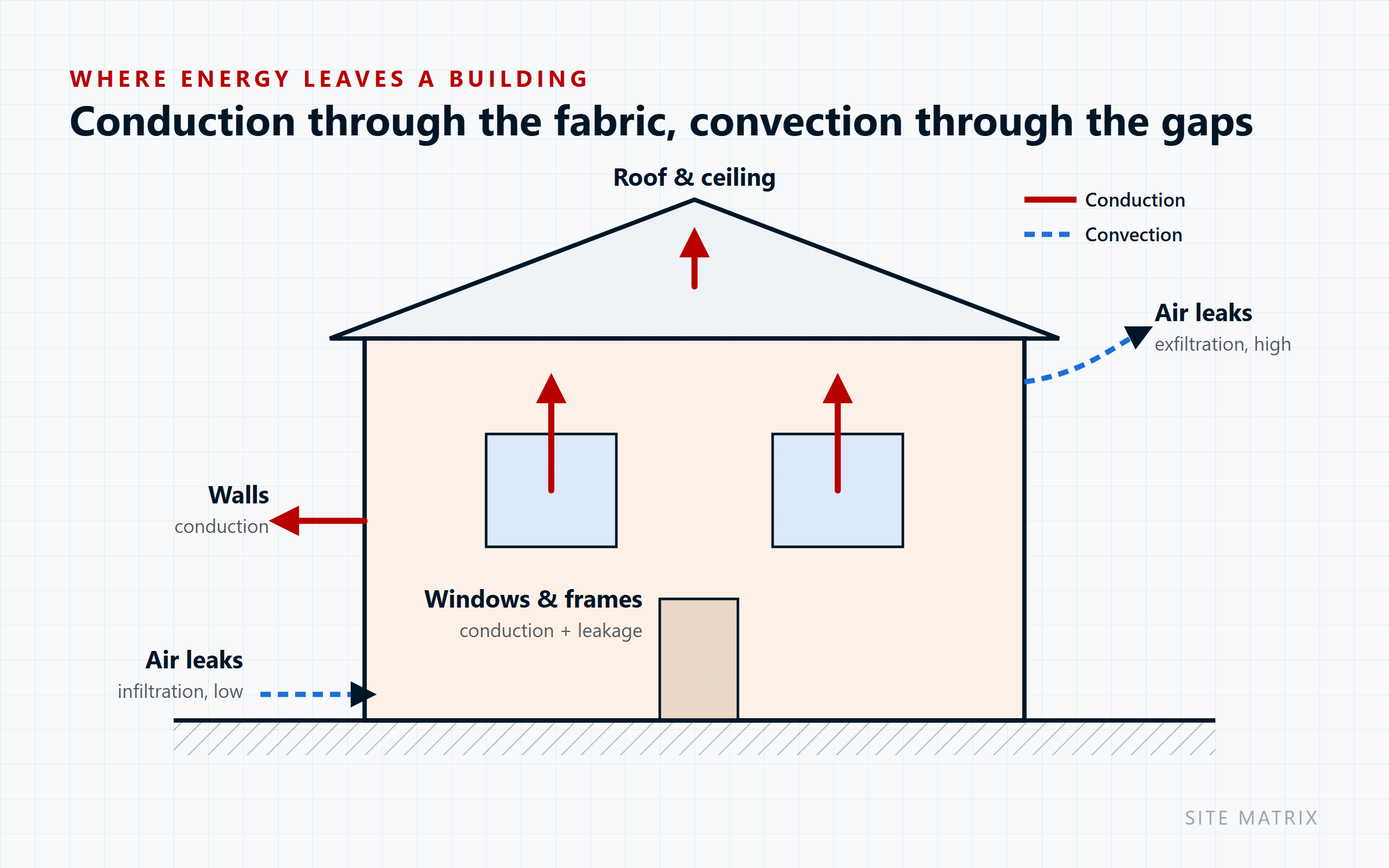
Conduction moves heat through the building fabric — roofs, walls and windows. Convection carries it out through gaps: air leaks out high and is drawn in low.
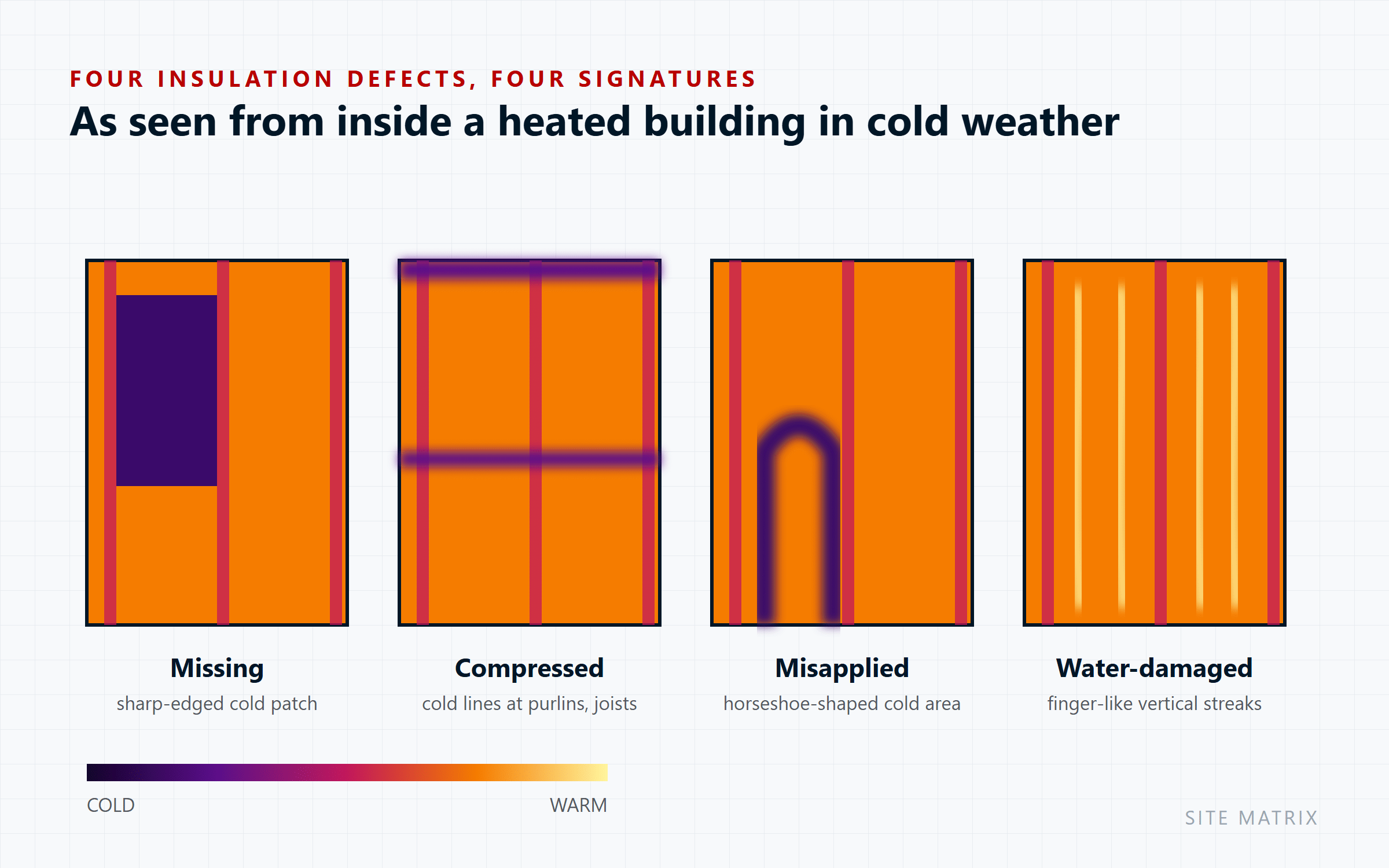
Each insulation defect has its own thermal signature. Reading them correctly — and knowing which way the pattern should go — is where engineering interpretation matters.
Where a typical building loses its heat
Indicative ranges only – every building is different. A thermal survey shows where yours is losing heat.
Thermography closes that gap
A non-contact survey that shows where heat is likely escaping — without opening a single wall.
How we solve it
Plan. Survey. Report.
Plan
Timed to the
right conditions
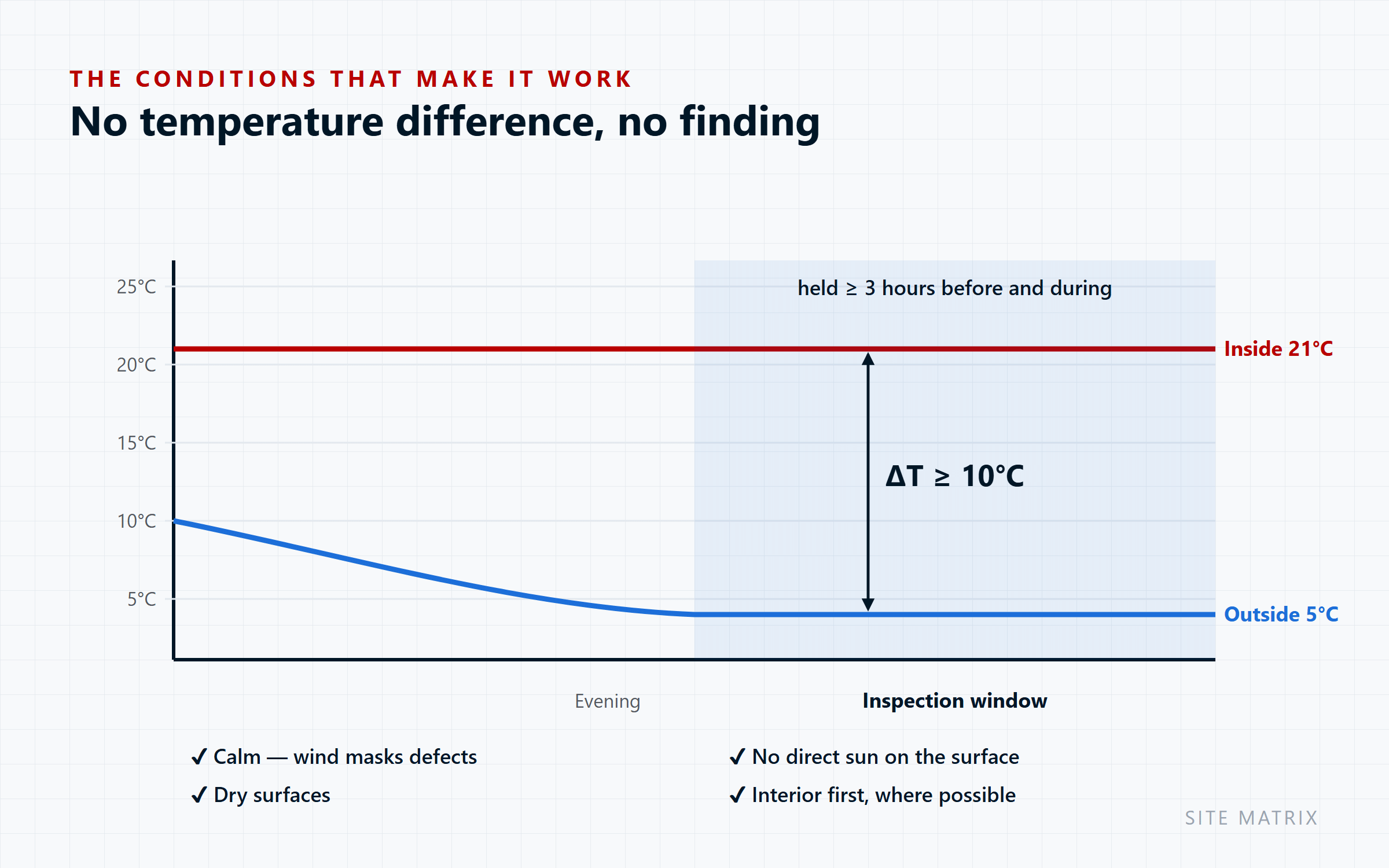
At least a 10°C inside-to-outside difference, held for three hours, calm and out of direct sun
Survey
Inside first,
then outside
Interior scans reveal what exterior-only surveys miss; air leakage is imaged from the side it shows on
Report
Located, imaged,
prioritised
Every finding with a thermal and daylight image, its cause and a recommended fix
What we deliver
Energy Surveys for buildings & plant
What the data shows
Common findings and what they mean
| Finding | Thermal signature and impact |
|---|---|
| Missing insulation | Sharp-edged cold areas in walls and ceilings — direct heat loss and comfort complaints |
| Compressed insulation | Cold lines at purlins, joists and fixings — R-value lost where the batt has been crushed |
| Misapplied insulation | Horseshoe-shaped cold areas where air moves behind poorly fitted batts |
| Wet insulation | Finger-like streaks running downward — lost R-value plus mould, pest and structural risk |
| Air leakage | Cold plumes at floors, skirtings and penetrations (in) or warm streaks at rooflines and joints (out) |
| Pipework and plant | Cold spots under chilled-water lagging (condensation, corrosion risk) or hot spots on refractory-lined equipment |
Why it matters
Lower bills, better comfort, fewer surprises
Cut energy waste
Fix the defects that are actually costing you, not the ones you guess at.
Solve comfort complaints
Cold spots, drafts and hot rooms traced to a physical cause.
Catch moisture early
Wet insulation and condensation found before mould, corrosion or structural damage.
Verify what you paid for
Independent evidence that insulation was installed properly — useful for defects and warranty claims.
Who we work with
For anyone responsible for a building’s performance
Facility & asset managers
Builders & insulation installers
Industrial plant operators
Energy surveys have a season. Book yours for the cooler months, when the temperature difference makes defects far easier to see.
Your questions answered
Frequently Asked Questions
When is the best time for an energy survey?
When there’s at least a 10°C difference between inside and outside for several hours — in Victoria that usually means the cooler months, in the evening or early morning. We plan the timing with you.
Do you inspect from inside or outside?
Interior surveys usually reveal more, and air infiltration can only be seen from inside. We scan from both sides where the building allows.
Can you find air leaks?
Yes. Thermography shows the temperature pattern that moving air leaves behind. For small leaks we can combine it with blower door testing to pressurise the building.
Does the building need to be shut down?
No. The building or plant stays in normal use — in fact the heating, cooling or process load is what makes the defects visible.
What happens if the weather isn’t right?
We reschedule at no cost. Thermal surveys depend on the right temperature difference, dry surfaces and calm conditions — flying or scanning in the wrong conditions produces data you can’t rely on.
Who owns the data and imagery?
You do. All captured data, imagery and reports become your property on delivery; we retain a copy for our own records only.
Explore more
Related Services
Pairs well with: → Drone Inspections · → NDT — Non-Destructive Testing