
Point the Camera at the Wrong Side and You’ll Find Nothing.
How Buildings Lose Heat, Part 2: Convection
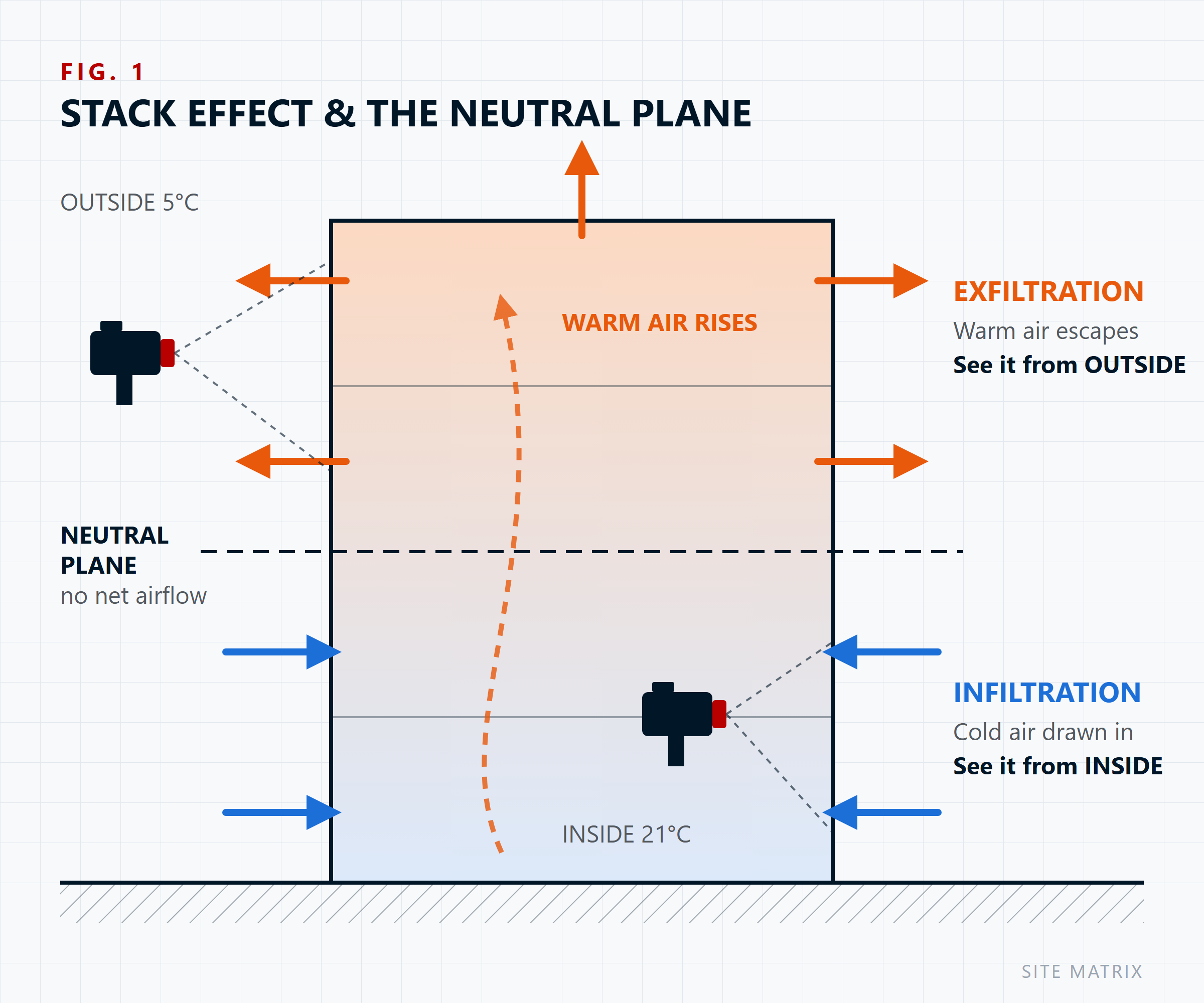
Air leaks lose as much energy as poor insulation — often more. But moving air plays by different rules: every leak can only be seen from one side of the building.
New to the series? Start with Part 1: Conduction.
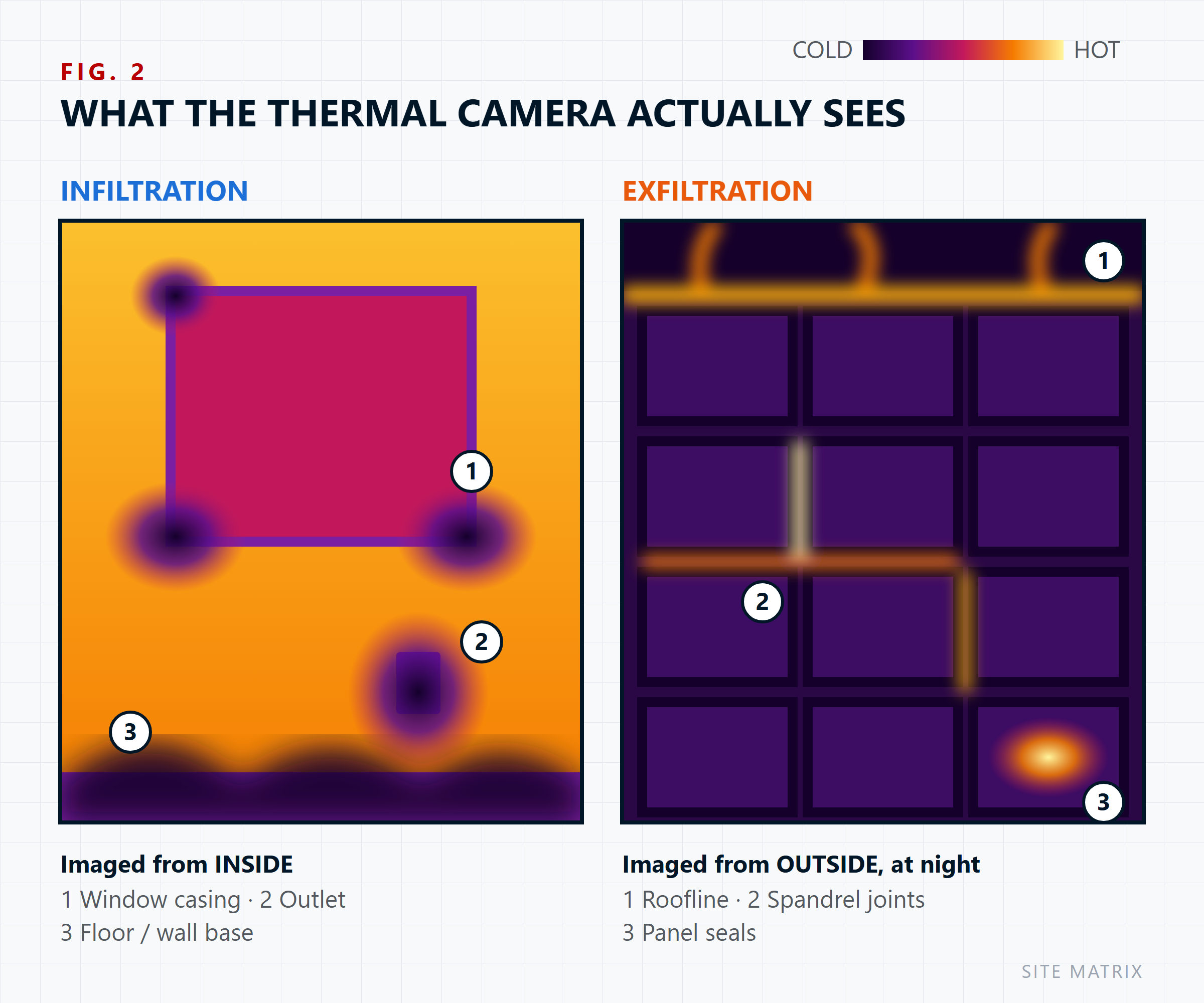
Infiltration
Cold air coming in. Look for cold spots at floors, wall bases, window and door casings and power outlets. Image from inside.
Exfiltration
Warm air going out. Look for warm streaks along rooflines, spandrel joints and panel seals. Image from outside, out of direct sun.
Pressure flips the rules
If the HVAC system keeps the building under positive pressure, even cool air can be seen escaping on a warm day. Direction follows pressure, not just temperature.
Blower Door Testing: Making Small Leaks Obvious
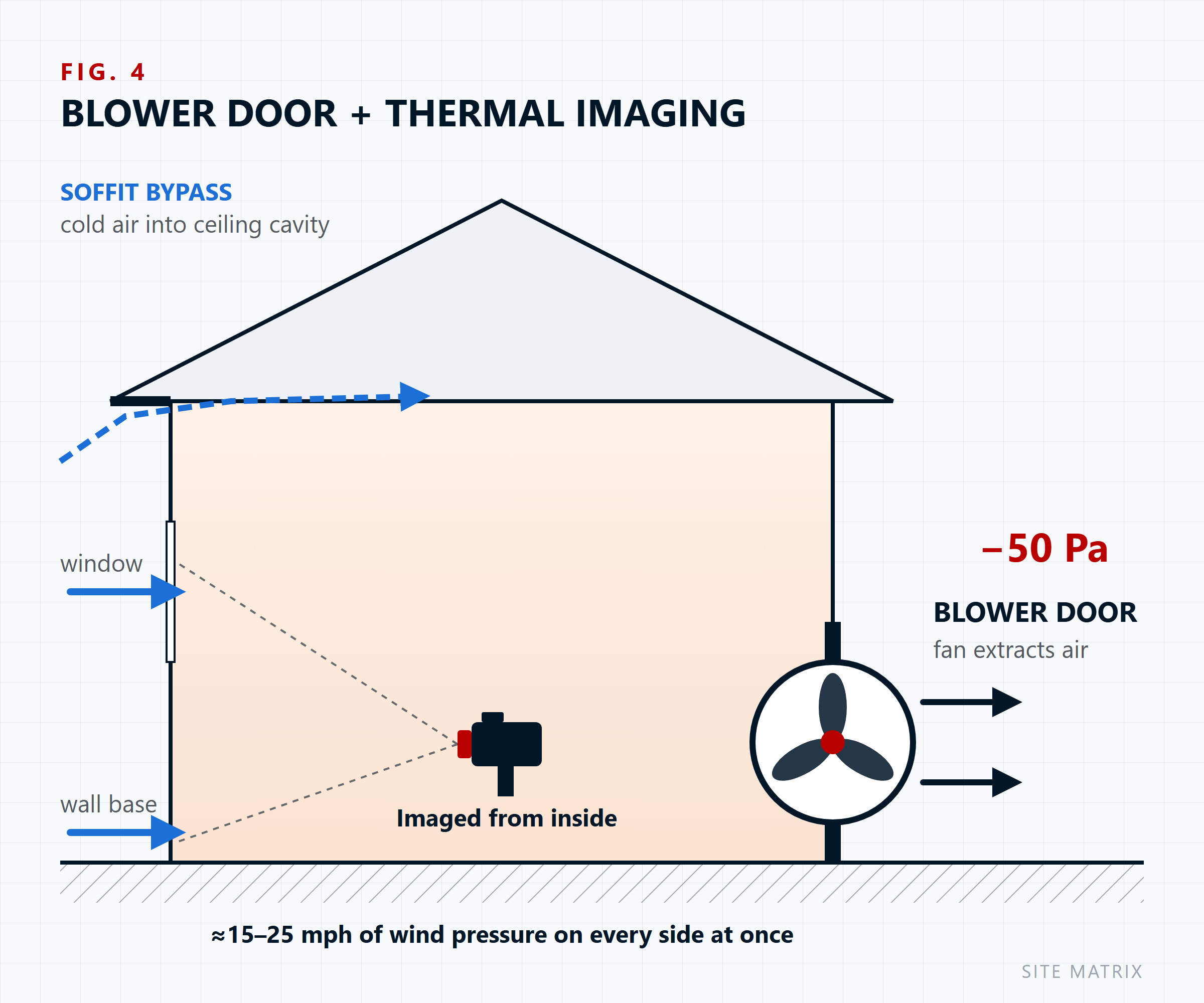
On a calm day, small leaks may not move enough air to show up. A blower door fan pressurises or depressurises the whole building, turning marginal leaks into obvious ones — and the thermal camera shows exactly where they are.
Wind pressure simulated on every side at once
0
mph
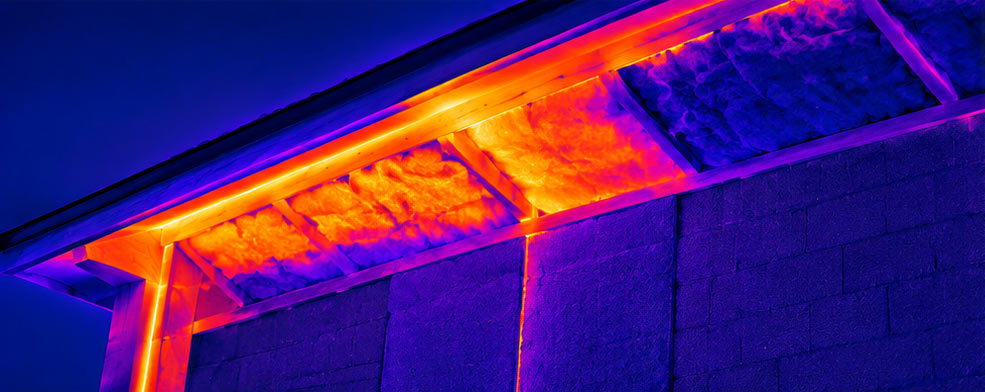
Soffits: The Leak Nobody Can Explain
Roof soffits can let outside air into wall and ceiling cavities, and the thermal pattern often looks backwards. It’s a common cause of comfort complaints and, in cold climates, pipe freeze-ups that owners can’t trace.
It’s rarely visible from outside. Finding it takes an interior inspection, often with a blower door. Site Matrix can assist with all site preparatory works including site blower testing.
When Something Else Is Pushing the Air
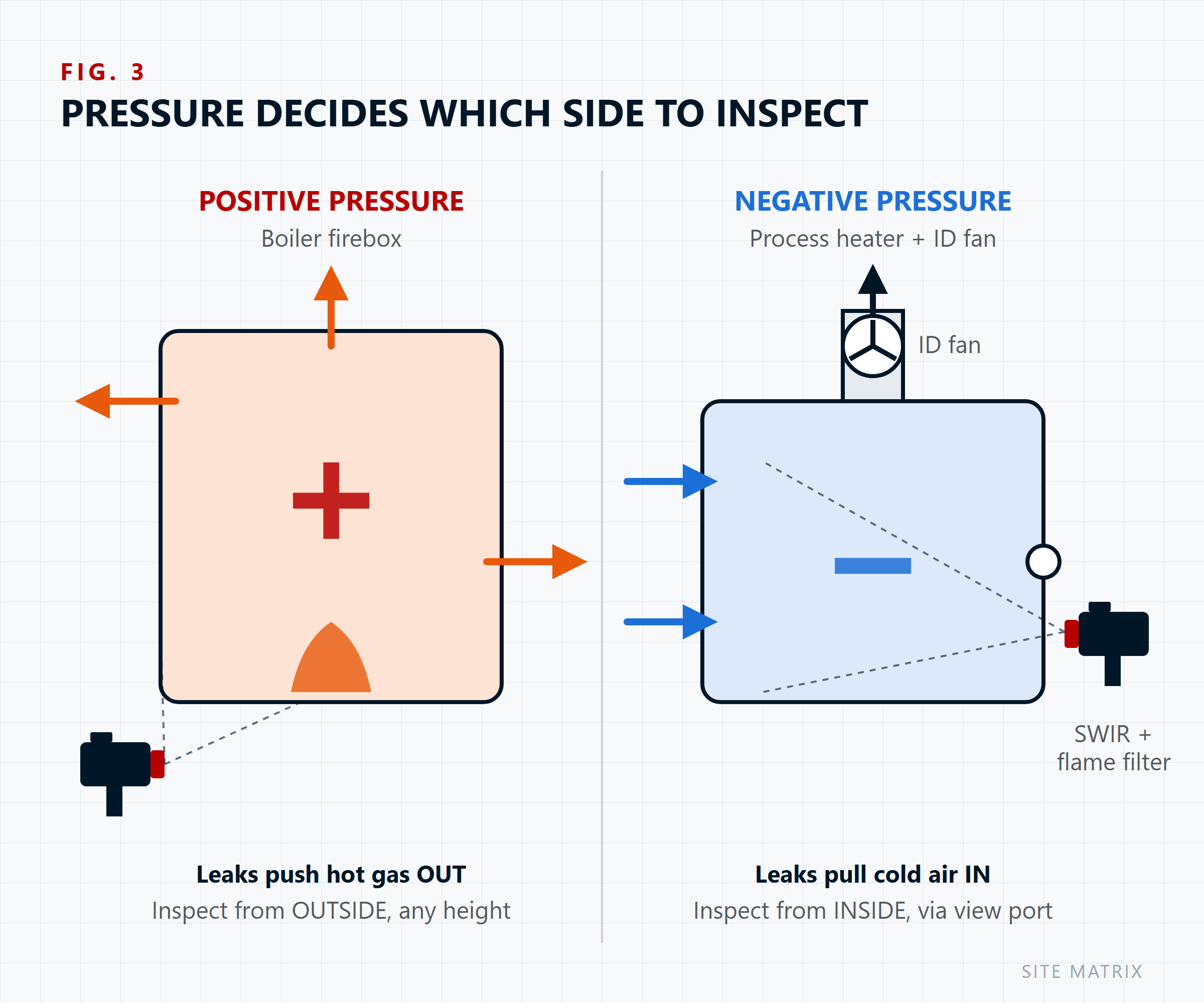
Wind, fans and HVAC systems create forced convection. The same in/out logic applies, but the side you inspect from changes:
- Wind tips the neutral plane: the windward side leaks in, the leeward side leaks out.
- Positive pressure (e.g. a boiler firebox) pushes air out at every leak. Inspect from outside.
- Negative pressure (e.g. a process heater with an induced-draft fan) pulls air in. Inspect from inside, using a short-wave imager with flame filters.
The same applies to air-cooled condensers and other plant under negative pressure.
A Clean Report Can Still Be Wrong
Wrong side, wrong time of day, wrong pressure assumptions — and the report looks spotless while the real leak goes unfound. Every inspection we run starts with one question: which mechanism are we chasing, and what does that mean for where we point the camera?
“A thermal camera can’t see air. It sees the fingerprint air leaves behind.”
How We Inspect for Air Leakage
- On a calm day, so wind doesn’t mask defects
- From inside wherever possible — it reveals more
- At night for exteriors — no solar loading
- Accounting for HVAC settings and building pressure
- Reading natural and forced convection together
Why Site Matrix
Anyone can point a camera at a wall. We plan the inspection around the physics — so it finds what’s really there.
- Engineering-led interpretation
- Blower door and thermal imaging combined
- Buildings, facades and industrial plant
- Located, imaged report for every finding
Find Out Where Your Building Is Leaking Energy
Our Energy Analysis covers facades, whole-building air leakage and mechanical plant — with a located, imaged report for every finding.
Conduction explains how heat moves through the material.
Convection explains how air carries it out.
Together, they show exactly where your energy is going.