
INDUSTRY NEWS · DRONE REGULATION · SEPTEMBER 2026
Above 400 ft: What CASA’s Proposed Changes Mean for Asset Owners and Operators
Not law yet — but the direction is clear for anyone who owns, builds or maintains tall assets.
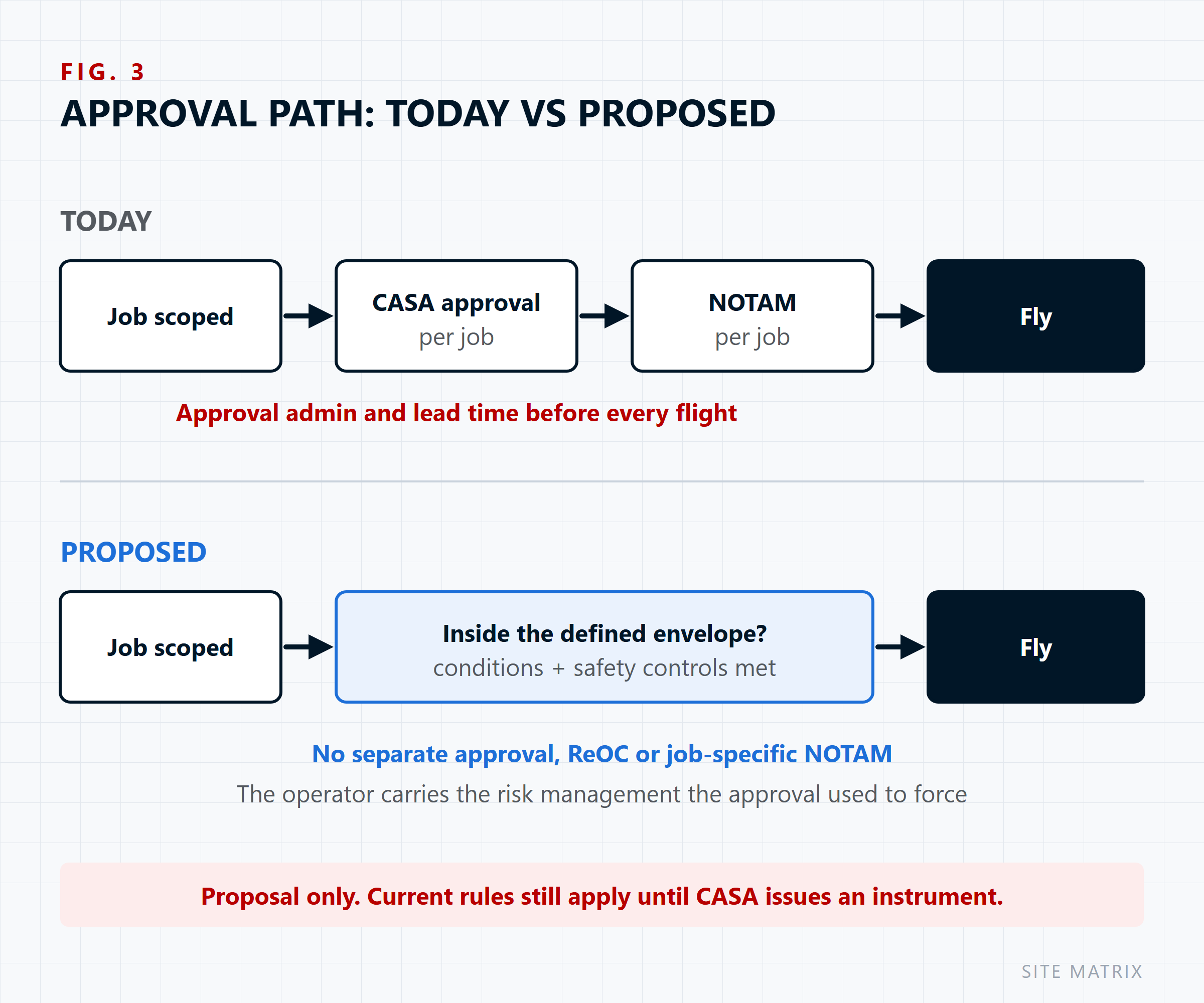
CASA is moving towards letting certain drone operations fly above 400 ft without a separate approval.
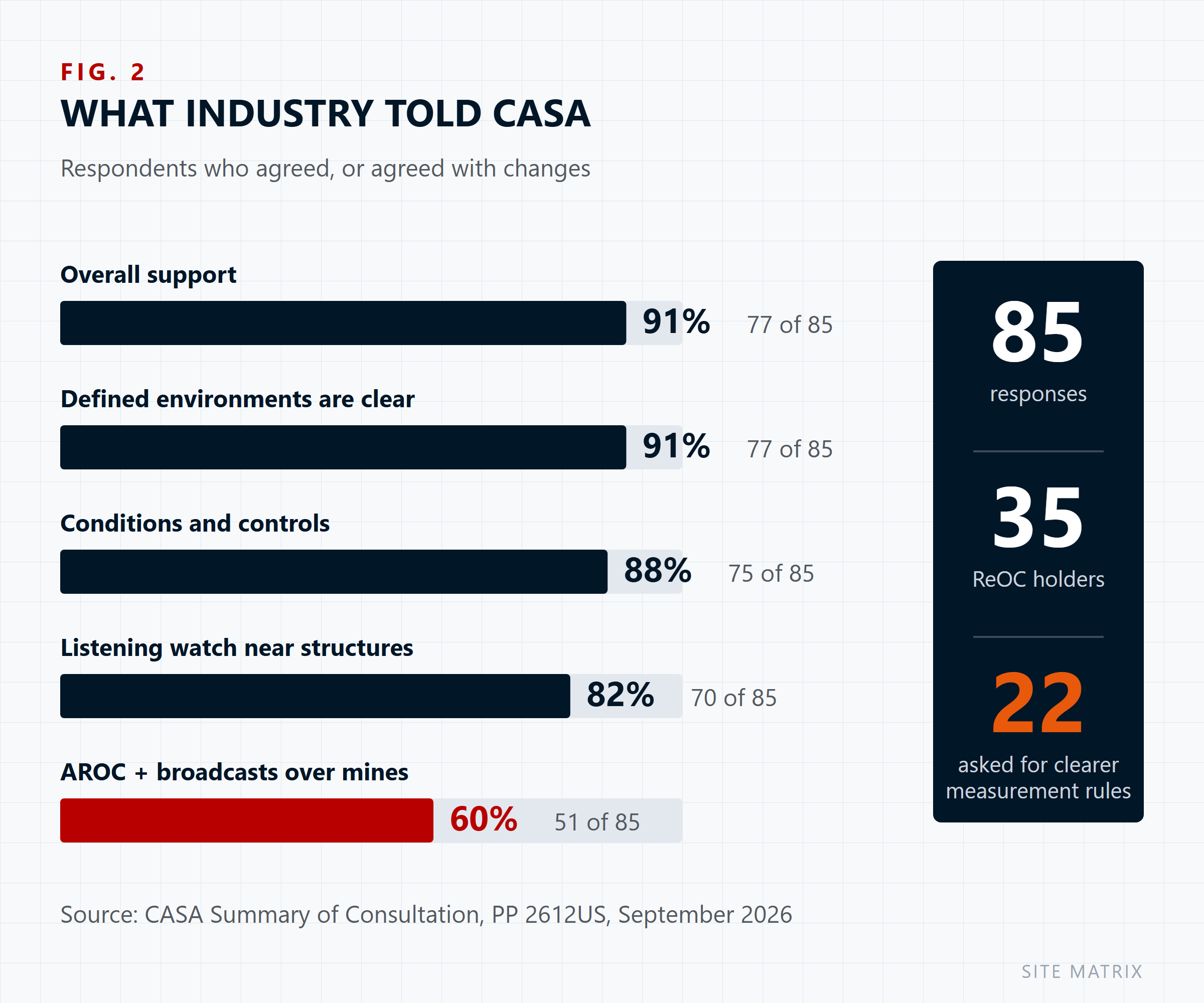
In July 2026 CASA consulted on Policy Proposal PP 2612US, covering two tightly defined environments: close to tall structures and over active mine pits. Its September Summary of Consultation shows strong industry backing. Our work happens right where this lands — roofs, facades, towers, plant and elevated infrastructure — so here’s what it means in practice.
The Consultation at a Glance
Responses received
0
Support the proposal
0
%
Responses from ReOC holders
0
Asked for clearer measurement rules
0
Source: CASA Summary of Consultation, PP 2612US, September 2026.
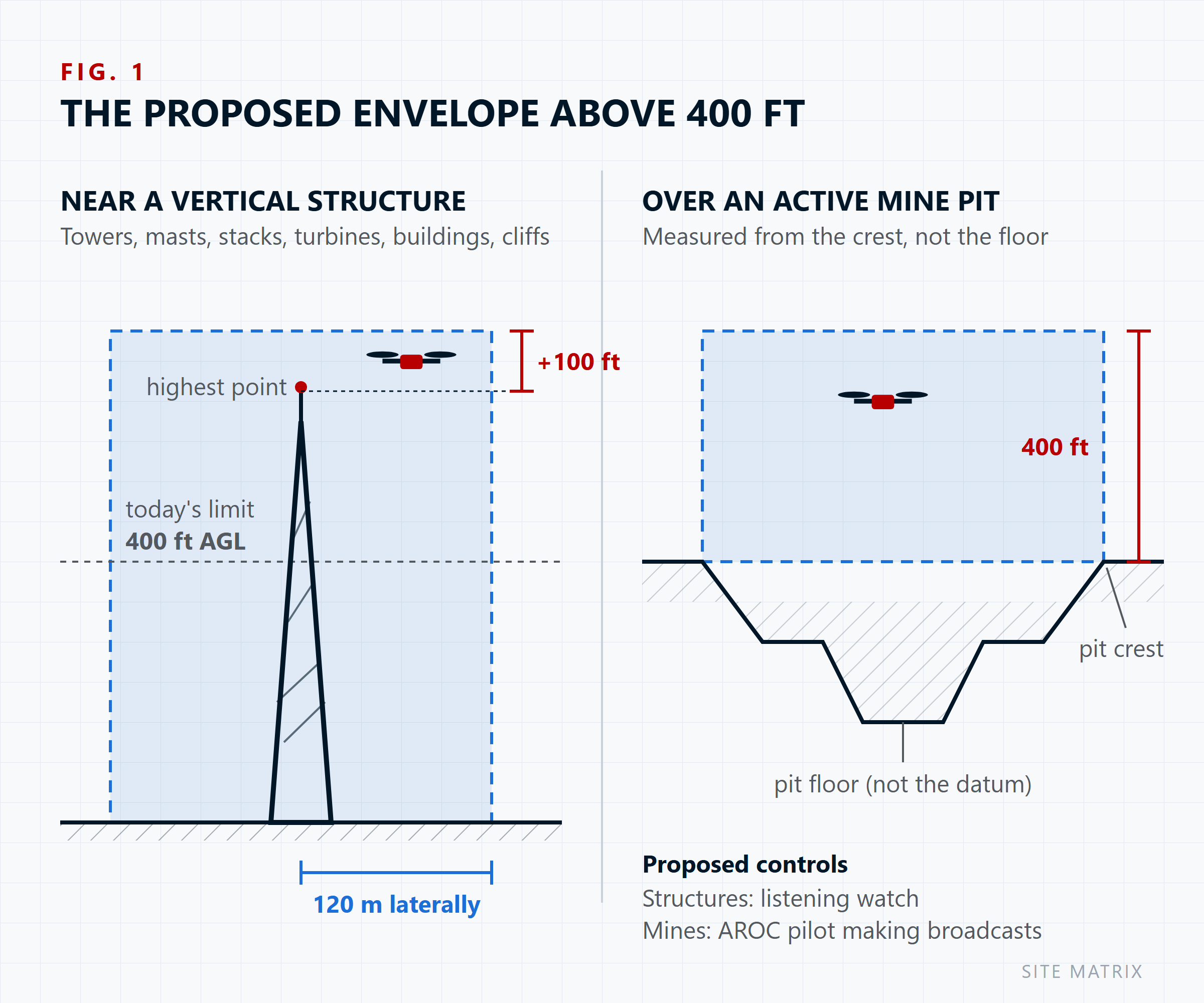
Near a vertical structure
Within 120 m laterally of a structure, up to 100 ft above its highest point.
Proposed control: listening watch on the relevant frequency.
Over an active mine pit
The 400 ft limit measured from the nearest pit edge or crest — not the pit floor.
Proposed control: AROC-qualified pilot making broadcasts.
NOTAMs replaced
Routine, job-specific NOTAMs would give way to broader advisory information.
CASA would stop tracking each flight and rely on the envelope and pilot controls instead.
What Industry Told CASA
The debate was about how, not whether. Five issues came up again and again:
- Eligibility. Some argued relief should stay with ReOC holders, who bring documented procedures, a chief remote pilot and occurrence reporting.
- Measuring the envelope. 22 respondents wanted clearer rules for 120 m and “highest point” on irregular structures and turbines.
- Low-level crewed aircraft. Helicopters, firefighting and mustering were the top safety concern.
- Radio and notification. Listening watch was accepted; mine broadcasts were contested, and 17 asked for a NOTAM transition period.
- Ground risk. Fly-aways, turbulence, GNSS degradation and operations over workers.
Lighter Approvals Don’t Mean Lighter Responsibility
If the proposal proceeds, CASA will have less job-by-job visibility of who is flying near your asset. The quality of the operator you engage matters more, not less.
If you own or manage tall assets
- Shorter lead times — inspect towers, stacks, facades and plant when you need to, including after storms or incidents.
- Less work at height — fewer people on ropes, EWPs and scaffolds. A real WHS benefit.
- More repeatable monitoring — regular condition and progress capture becomes easier to justify.
Ask your drone provider
- Do you hold a ReOC, or rely on an individual licence?
- How will you measure the envelope around this structure?
- What’s your plan for low-level aircraft, fly-away and loss of link?
- Who reviews the data, and what qualifications do they hold?
What It Means If You Fly
A chance to cut admin — but only if you’re ready to carry the risk management the approval used to force.
- Nothing has changed yet. Keep applying for approvals and NOTAMs as you do now.
- Check your equipment. Firmware may cap altitude at 400 ft or need geofence and return-to-home changes.
- Get radio-ready. If you work around mines, consider an AROC now.
- Document your envelope for your typical assets and write it into your procedures.
- Plan for no NOTAM. Coordinate locally with aerodromes, helicopter operators and site managers.
Operators who can demonstrate systems, not just a licence, will stand out.
“A 60 m tower isn’t low risk because it’s under 400 ft — and a 150 m one isn’t high risk just because it’s over.”
Our View: What Won’t Change
- ReOC 9692 — documented procedures and a chief remote pilot
- Engineering first, under RPE Engineering Oversight
- Risk assessment on every site, approval or not
- Working alongside your team, not replacing it
Where to From Here
CASA will now decide its final position. If it proceeds, it will be implemented through a CASA instrument with supporting guidance. There’s no confirmed date yet.
- Asset owners: list the tall assets you inspect and how you access them today
- Operators: review procedures, platform settings and radio competency
- Everyone: watch CASA’s consultation hub for the final instrument
We’ll update clients when CASA publishes. Visit CASA’s consultation hub →
Less paperwork is coming.
Accountability isn’t going anywhere.
Choose an operator built for both.
Source: CASA, Summary of Consultation on Drone operations above 400 ft in defined environments (PP 2612US), September 2026. This article summarises a policy proposal, not current regulation.