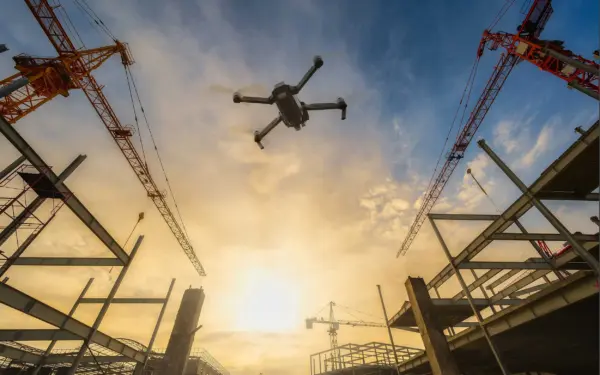
A drone can capture thousands of images in a single flight.
That does not mean it knows what matters.
In a professional drone building inspection, the aircraft is only one part of the system. The quality of the result depends on the person who plans the mission, reads the site, manages the flight, checks the imagery and understands where visual evidence ends.
The operator’s judgement determines what you learn.
For Site Matrix, every aerial inspection is supported by engineering thinking, documented planning and CASA-compliant operations under ReOC 9692. The objective is not to collect attractive aerial footage. It is to produce useful, defensible information for owners, builders, engineers, facility managers and asset teams.
The Aircraft Captures Data. People Create Understanding.
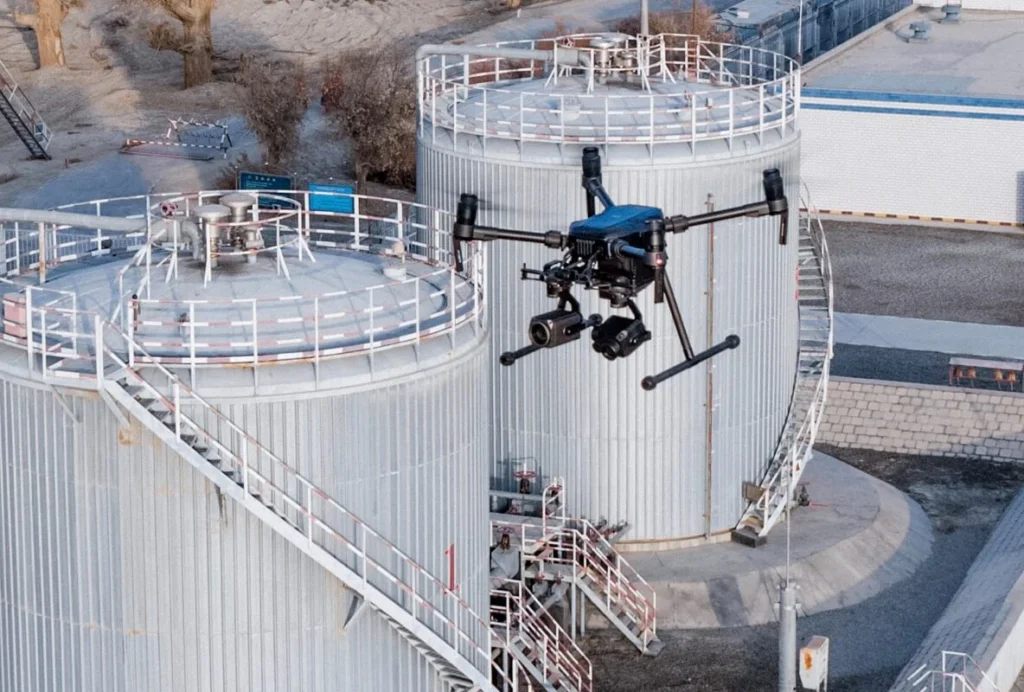
A drone can fly around a façade, roof or construction site. It can record surfaces that would otherwise require scaffolding, rope access or elevated work platforms.
But the aircraft cannot decide:
- Which elevation requires closer inspection
- Whether a shadow is hiding a defect
- If glare is affecting image quality
- Whether wind conditions are suitable
- Which roof penetrations, joints or interfaces deserve attention
- Whether a visible mark is a defect, a maintenance issue or an inconclusive observation
- When the available evidence is not sufficient to support a conclusion
Those decisions require trained people.
A remote pilot understands aircraft control, airspace, site hazards and flight limitations. An engineer understands building systems, materials, failure patterns and the decisions the inspection needs to support.
Together, they turn flight data into asset intelligence.
CASA Compliance Starts Before the Drone Leaves the Ground
CASA compliance is not a label applied after the imagery has been captured.
It begins with preparation.
Commercial drone operations in Australia must be conducted within the applicable requirements of the Civil Aviation Safety Authority, including aircraft registration, pilot qualifications, operating conditions and documented procedures. Site Matrix conducts drone operations under ReOC 9692, supported by defined operational processes and engineering oversight.
A ReOC is not a substitute for judgement. It is part of the framework that requires disciplined judgement.
Before a mission, the team considers:
- The inspection objective and required deliverables
- Airspace, nearby infrastructure and site restrictions
- Take-off and landing locations
- People, vehicles, cranes, plant and other ground hazards
- Wind speed, gusts and building-induced turbulence
- Sun position, reflections, shadows and glare
- Access arrangements, inductions and exclusion zones
- The aircraft, sensors and flight path suited to the task
- Emergency procedures and conditions that would stop the flight
The result is a controlled inspection plan rather than an improvised flight.
Wind Changes the Mission
Wind is not just a comfort issue for the pilot. It affects flight stability, battery use, image sharpness and the distance that can safely be maintained from a structure.
Buildings also change wind behaviour. Corners, roof edges, narrow corridors and elevated façades can produce turbulence that is not obvious from ground level. A calm street-level reading does not necessarily mean calm conditions beside a high-rise façade or above a rooftop.
A competent remote pilot assesses:
- Forecast wind and gust conditions.
- The likely effect of the building on airflow.
- The aircraft’s operating limits and a conservative working margin.
- Whether the proposed stand-off distance is practical.
- Whether the mission should be changed, delayed or stopped.
This is particularly important during a facade drone inspection. The closest possible flight is not automatically the best inspection. A slightly wider, stable pass may produce clearer and more consistent evidence than a drone being pushed close to the surface in unstable air.
The safest flight is often the one that is adjusted before it begins.
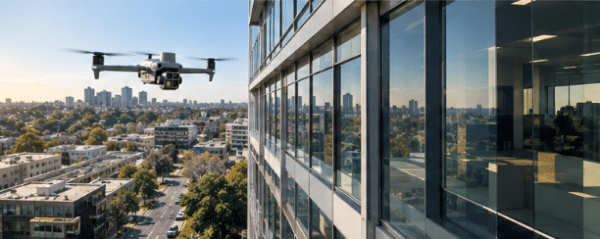
Glare Can Hide the Evidence
A façade may appear clear on the ground but become difficult to interpret through a camera. Glass, polished metal, wet surfaces and light-coloured cladding can reflect the sky, sun or surrounding structures.
Glare can conceal:
- Sealant deterioration
- Cracks and surface damage
- Discolouration
- Water marks
- Localised corrosion
- Panel movement or interface issues
The solution is not simply to increase image quantity. The pilot and engineer may need to change the flight time, direction, gimbal angle, distance or viewing angle.
Façade orientation matters. So does the sun’s position. A strong reflection from one direction may disappear when the aircraft moves slightly off-axis. A second pass under different conditions may provide the comparison needed to interpret the surface properly.
This is where the human element becomes visible. The operator is not just following a pre-set route. The operator is reading the environment and adapting the capture strategy to protect the quality of the evidence.
Mission Planning Determines What Gets Captured
Different inspection objectives require different flight plans.
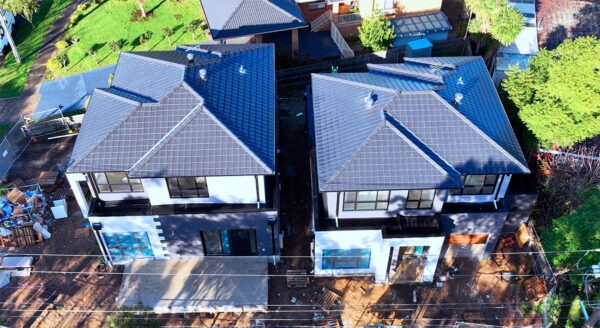
A roof inspection may focus on membranes, penetrations, drainage paths, plant, flashings and interfaces. A façade inspection may require systematic coverage of panels, joints, balconies, windows, parapets and architectural features. A construction flight may need repeatable viewpoints that allow progress to be compared over time.
A construction progress monitoring drone mission should not be treated as a series of unrelated photographs. Repeatability is important. Consistent positions, headings, heights and camera angles make it easier to compare stages of work and identify changes.
Depending on the scope, the capture may support:
- Progress records
- Design or scope verification
- Defects and incomplete works documentation
- Site logistics review
- Stakeholder reporting
- Aerial mapping
- Digital models or asset records
- Handover and maintenance documentation
The pilot needs to understand what the project team will do with the information. The engineer needs to understand which views will support that decision.
The purpose comes before the flight path.
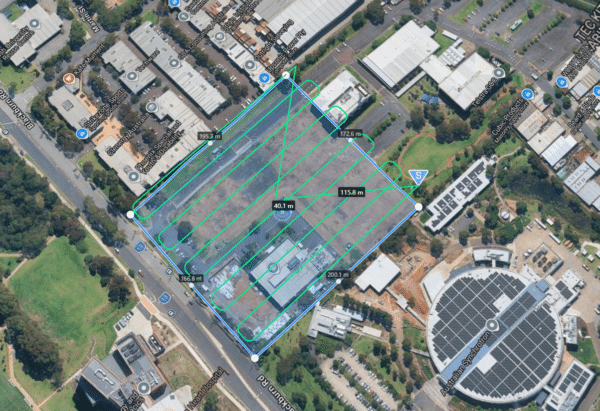
Image Verification Is Part of the Inspection
Capturing imagery is not the end of the work.
After the flight, the images need to be reviewed for coverage, clarity and relevance. The team checks whether the required areas were captured and whether the images are suitable for interpretation.
This may identify:
- Obscured or incomplete areas
- Motion blur
- Reflections that affect confidence
- Inconsistent exposure
- Poor viewing angles
- Missing contextual images
- Areas requiring a second pass or another inspection method
A single close-up may show a mark. It may not show where that mark sits within the building or whether it is part of a wider pattern. Context matters.
Good inspection imagery usually combines:
- Wide views that locate the area
- Medium views that show the surrounding condition
- Close views that document the observation
- Consistent coverage that supports comparison
The report should help the reader find the issue again. That means locations, references, images and explanations need to work together.
Knowing What Not to Claim
Professional inspection requires restraint.
A drone image can reveal a visible condition. It cannot automatically prove the cause, severity or structural significance of every condition shown.
For example, an image may identify:
- A crack
- Surface staining
- Displaced or damaged cladding
- Corrosion staining
- Ponding or debris
- A suspected moisture-related area
- An apparent construction deviation
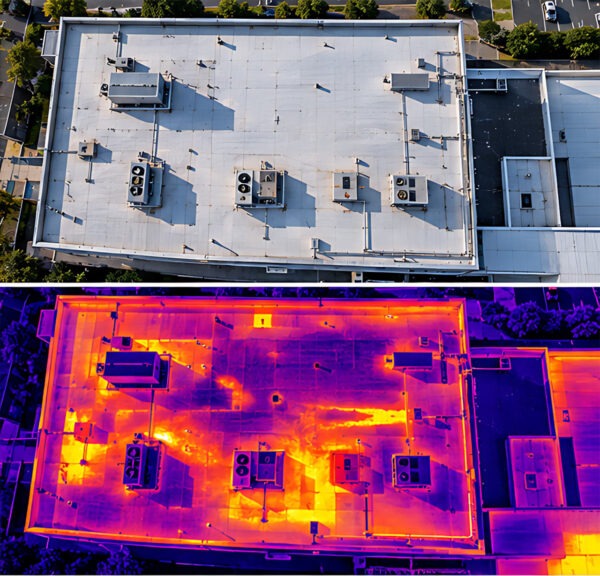
But some findings require additional investigation. Thermography may help identify heat or moisture-related anomalies. Non-destructive testing may be needed to assess what is happening beneath a surface or within a material.
This is why Site Matrix combines aerial inspection with the wider Site Matrix Method: Above, Within and Beneath.
- Above identifies what can be seen from the air.
- Within uses thermography to identify temperature patterns that may indicate hidden conditions.
- Beneath uses non-destructive testing to investigate material integrity and subsurface concerns.
The correct conclusion may be that further testing is required.
That is not a weakness in the inspection. It is accurate reporting.
Engineering Oversight Turns Capture Into a Decision
A collection of photographs is not the same as an engineering-led inspection.
Site Matrix reports are developed to help asset owners and project teams decide what to do next. Findings are located, described and prioritised according to the inspection purpose. Where the evidence has limitations, those limitations are identified rather than hidden.
That supports practical decisions about:
- Maintenance priorities
- Further investigation
- Contractor engagement
- Defect rectification
- Construction documentation
- Insurance or warranty discussions
- Asset condition and risk management
The work is designed to be clear enough for a property manager and useful enough for an engineer.

Three People-Centred Questions to Ask Your Drone Provider
Before engaging a provider for a drone building inspection, ask:
1. Who is responsible for the flight?
Confirm that the operator is appropriately qualified and that the operation is conducted through a compliant, documented system.
2. How will the mission be planned?
Ask how the provider will manage wind, glare, access, people, nearby hazards and the areas that need to be captured.
3. Who interprets the result?
Understand whether you will receive raw images or an engineering-reviewed report that explains what was observed, what remains uncertain and what action may be appropriate.
The aircraft matters. The person behind it matters more.
See More. Decide Earlier.
A CASA-compliant drone inspection is not defined by the size of the drone or the number of images collected.
It is defined by preparation, control, technical judgement and honest interpretation.
At Site Matrix, aerial inspection is one part of an engineering-led process that combines drone technology, thermography and non-destructive testing where required. The outcome is information that helps you see the condition of a building, construction site or asset more clearly.
If you need a drone building inspection, façade review or construction progress monitoring scope, contact Site Matrix with the asset location, inspection objective and any access constraints.
The drone captures the view. Good judgement determines what it means.