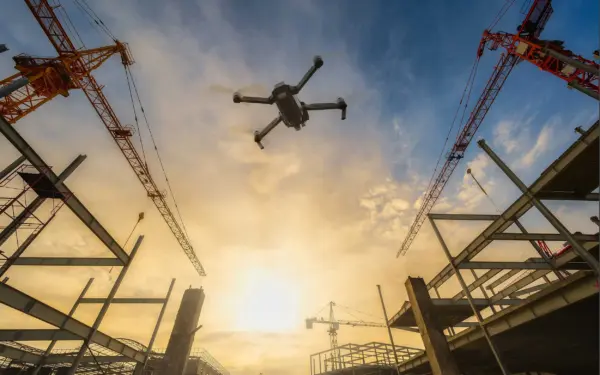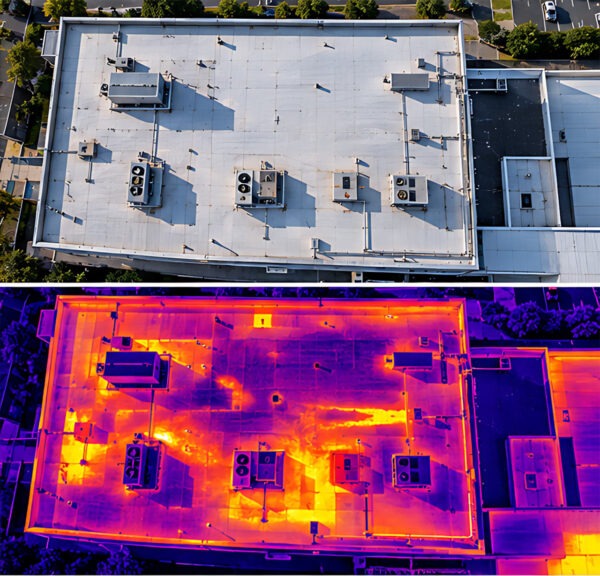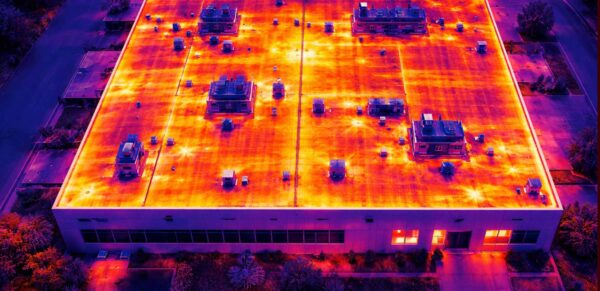
Short answer: for seeing the condition of a roof, a drone is safer, faster and more thorough than a ladder – it covers every face of the roof, never breaks a tile and produces a time-stamped photographic record. A ladder (or a qualified person on the roof) still wins when something has to be touched, lifted, measured or tested. The best inspections use the drone first to find the problems, then send people up only where they are genuinely needed.
This guide from the Site Matrix engineering team compares the two methods properly – safety, legal duties, coverage, cost, evidence quality and limitations – with references to Safe Work Australia, WorkSafe Victoria, the Victorian OHS Regulations and CASA, so you can make the decision on facts rather than sales claims.
In this guide
- Drone vs ladder: the side-by-side comparison
- Safety: what the national data says
- Victorian law: why a drone sits at the top of the hierarchy of control
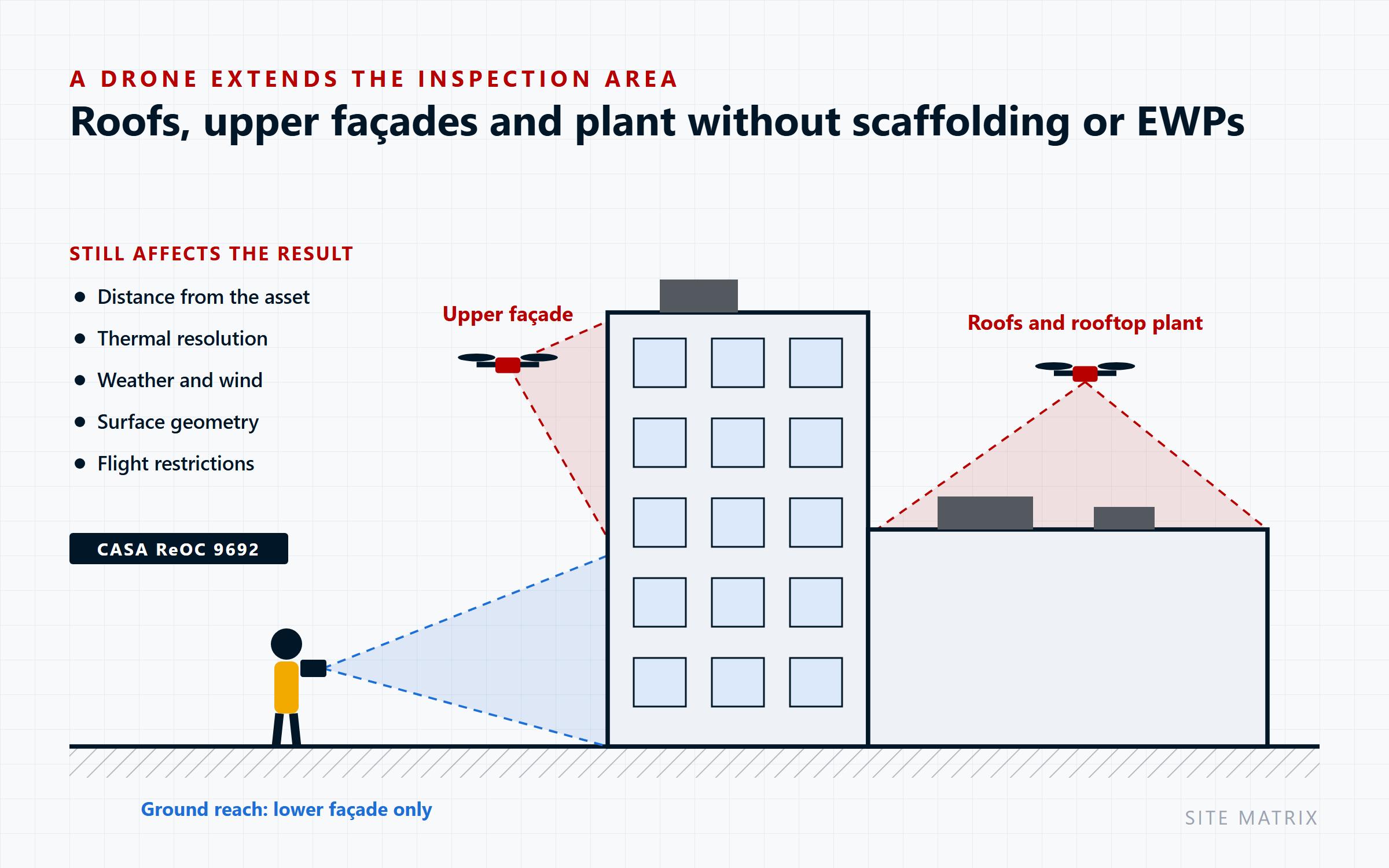
- Coverage: what a ladder inspector actually sees
- The hidden cost of walking on a roof
- Evidence quality: photos you can rely on
- When a ladder (or hands-on check) still wins
- Best practice: drone first, hands-on where it counts
- Cost comparison
- Choosing an inspector – checklist
- FAQs
- References
Drone vs ladder: the side-by-side comparison
| Factor | Drone inspection | Ladder / walk-on inspection |
|---|---|---|
| Safety of the inspector | Pilot stays on the ground – no fall risk | Exposed to falls from the ladder, roof edge and fragile surfaces |
| Roof coverage | Every roof face, ridge, valley, gutter and penetration | Limited to what can be reached or safely walked; often eaves-level only |
| Damage to the roof | None – nothing touches the roof | Cracked tiles and slates, dented sheet, damaged membranes from foot traffic |
| Multi-storey and steep roofs | Same effort as a single storey | May need scaffolding, an EWP or rope access |
| Fragile roofs (slate, old tile, asbestos cement, skylights) | Suitable – no contact | Unsafe or prohibited to walk |
| Time on site (typical house) | 20–40 minutes of flying | 30–90 minutes, longer if access equipment is needed |
| Evidence | High-resolution, time-stamped, location-tagged images of everything | A few handheld photos of selected areas |
| Thermal imaging | Available – wet insulation, heat loss, solar faults | Handheld only, limited angles |
| Touching, lifting, testing | Cannot do it | Can lift tiles, check fixings, use moisture meters |
| Roof space (inside) | Cannot see it | Inspector can enter the roof space |
| Weather limits | Rain, strong wind | Rain, wind, wet or icy roofs, heat |
| Regulation | CASA rules for the operator | OHS / WHS fall-prevention duties for the employer and person controlling the site |
Safety: what the national data says
Falls from height remain one of the leading causes of workplace death in Australia. Safe Work Australia’s Key Work Health and Safety Statistics 2025 reports that 24 workers died after falling from a height in 2024 – 13% of all worker fatalities.[1] In 2023–24, roughly 7,800 serious workers’ compensation claims involved falls from a height – ladders, roofs, platforms and scaffolds.[1][2]
Height does not need to be great to be fatal. Safe Work Australia’s analysis of work-related falls has found that a large share of fatal falls happen from relatively low heights – the kind of height a single-storey roof or a ladder against a gutter involves.[3]
Every roof inspection that can be done from the ground is one fewer person exposed to the most common cause of fatal falls in Australian workplaces.
Victorian law: why a drone sits at the top of the hierarchy of control
In Victoria, the Occupational Health and Safety Regulations 2017 set out a hierarchy of control for any task with a risk of a fall of more than two metres.[4] Duty holders must work down the hierarchy in order:
- Eliminate the risk – for example, by doing the work on the ground or from a solid construction.
- Passive fall prevention – guard rails, scaffolding, elevating work platforms.
- Work positioning systems – such as travel-restraint harness systems.
- Fall arrest systems – catch harnesses, safety nets.
- Ladders and administrative controls – only where none of the above is reasonably practicable.
WorkSafe Victoria’s guidance is explicit that ladders sit near the bottom of this hierarchy and should only be used for access or light, short-duration tasks once the higher-order controls have been ruled out – and, where used, must be fit for purpose and correctly set up under regulation 45.[4][5][6]
A drone inspection is the clearest possible example of the first step – elimination: the inspection of the roof surface happens with the inspector standing on the ground. For businesses, facility managers and anyone engaging contractors, that matters: if a drone can do the job, sending someone up a ladder to do the same job is hard to justify under the hierarchy.
Coverage: what a ladder inspector actually sees
Many owners assume a “roof inspection” means someone has walked the whole roof. Often it hasn’t. Under the Australian Standard for pre-purchase building inspections, AS 4349.1, inspectors are only required to inspect areas where there is reasonable access – and for a roof exterior that is generally limited to what can be safely reached from a 3.6 metre ladder.[7] Two-storey roofs, steep pitches, wet or fragile surfaces and areas above that height are commonly noted as “not inspected – no safe access”.
In practice, a ladder inspection of a typical Melbourne home often means looking along the gutter line from the eaves. The ridge, the far side of the valleys, flashings around chimneys and solar mounts, and the upper storey are frequently assessed from a distance – or not at all. A drone sees all of it at close range, from every angle.
The hidden cost of walking on a roof
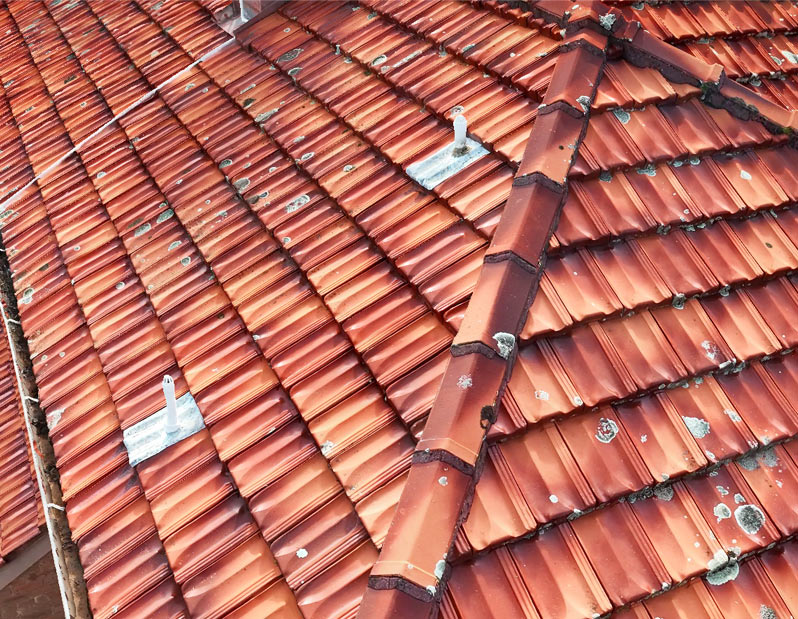
Foot traffic damages roofs. Terracotta and concrete tiles crack under a misplaced step; slate is notoriously brittle; old metal sheet dents and creases; membranes puncture. The irony of many “roof inspections” is that the inspection itself causes the next leak – often weeks later, when no one connects the two.
- Tile and slate – cracks may not be visible immediately but open up with the next thermal cycle or storm.
- Metal sheet – walking off the purlin lines dents the profile and can loosen fixings.
- Membrane roofs – tools and boots puncture membranes and open seams.
- Asbestos cement and skylights – fragile surfaces where a fall-through can be fatal; they should never be walked on.
Evidence quality: photos you can rely on
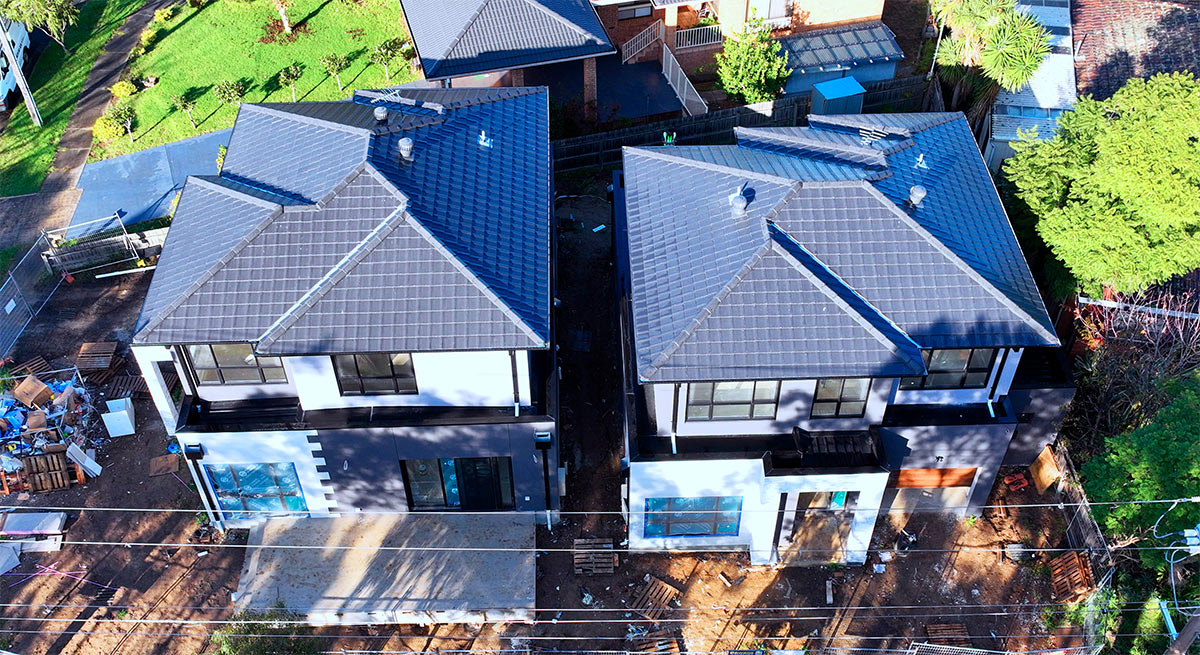
A drone inspection produces a complete, time-stamped and location-tagged photographic record of the roof. That matters well beyond the inspection itself:
- Insurance claims – storm and hail damage documented with date, time and position, before anyone has touched the roof.
- Contractor quotes – trades quote on the same images, so you compare like with like.
- Before and after – a repeat flight after repairs proves the work was done.
- Strata and asset records – a baseline you can compare against every year.
When a ladder (or hands-on check) still wins
Drones are not a replacement for every task – and any provider who says otherwise is overselling. A person on the roof or in the roof space is still needed to:
- Lift tiles or sheets to check sarking, battens and what is underneath.
- Test fixings – screws and nails that look fine but are loose.
- Take moisture readings or core samples to confirm what a thermal image suggests.
- Inspect the roof space – timber framing, insulation, rot, termites, vermin and roof leaks from below.
- Carry out repairs – resealing, replacing tiles, clearing gutters.
- Inspect under solar panels and plant, where a camera cannot see.
There are also situations where a drone flight isn’t practical – very small, low roofs where a quick ladder check is genuinely safe, or sites where airspace restrictions make flying slow to approve. The point is not “drone instead of people”; it is people only where they add something a camera can’t.
Best practice: drone first, hands-on where it counts
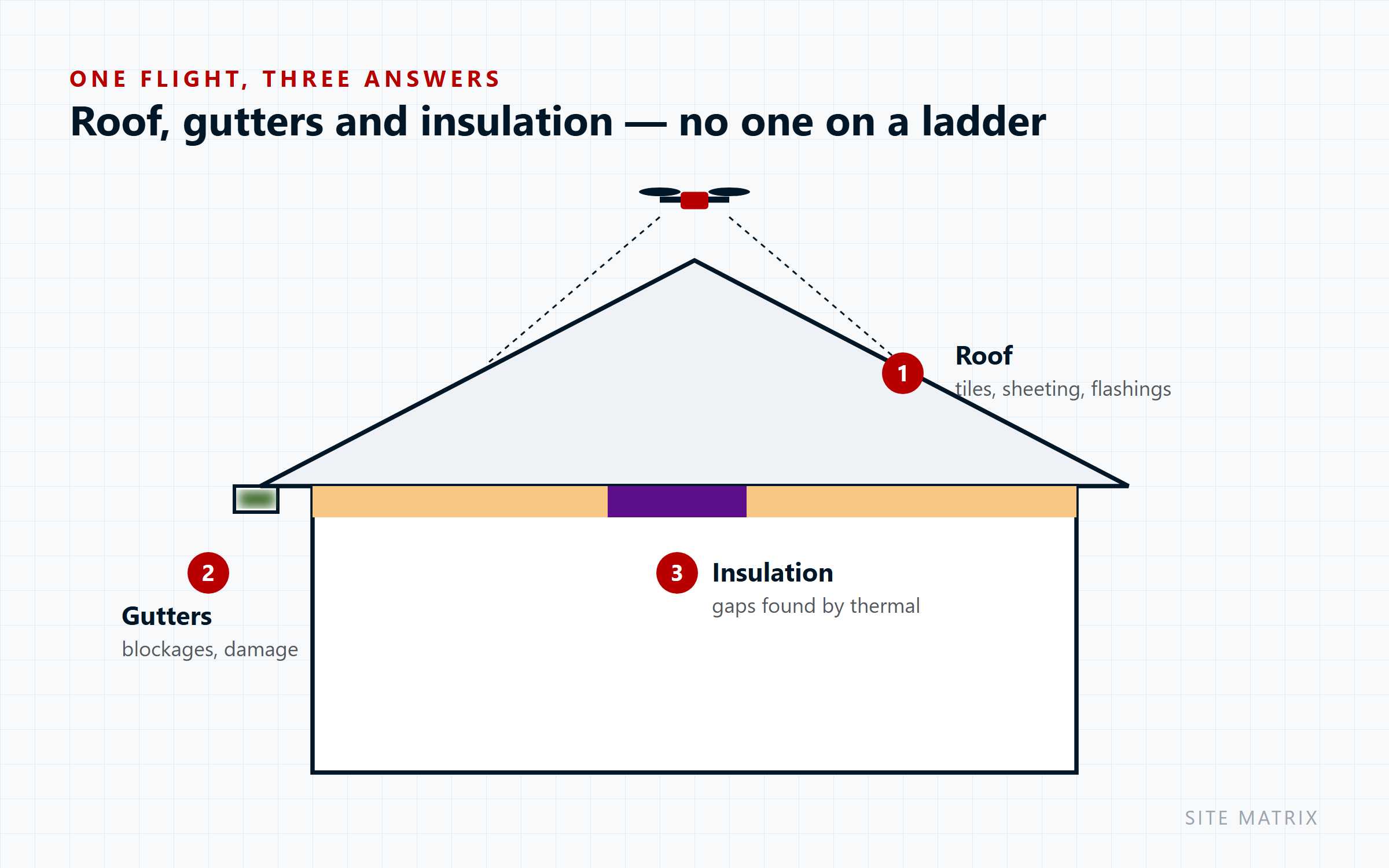
- Drone survey of the whole roof – visual, and thermal where moisture or heat loss is a concern.
- Engineering review of the images – defects located, rated and prioritised.
- Targeted hands-on checks only at the specific locations that need touching, testing or confirming – with the right access equipment for those spots.
- Repair scope written from verified findings, so contractors quote on real quantities.
- Verification flight after repairs, if needed, to confirm the work.
The direction of travel is clear: the Victorian Building Authority (now the Building and Plumbing Commission) has funded University of Melbourne research evaluating how drones can support roofing inspections compared with conventional approaches.[8] This approach typically means fewer people at height, for less time, on fewer parts of the roof – and a better answer at the end of it.
Cost comparison
| Approach | Indicative Melbourne cost (ex GST) | Notes |
|---|---|---|
| Drone roof inspection – residential | $300 – $500 | Whole-roof coverage, photo record, written summary and priorities |
| Drone + thermal – residential | $550 – $900 | Adds moisture / insulation insight; timing matters and priorities |
| Drone roof survey – commercial | $800 – $1,500 | Defect register with locations and priorities |
| Ladder inspection within a pre-purchase building inspection | Included in the building inspection fee | Roof coverage limited to safe ladder access (AS 4349.1) |
| Scaffold or EWP access for a full hands-on roof inspection | $2,000 – $5,000+ | Access cost alone, before inspection and reporting |
Choosing an inspector – checklist
- ☐ CASA ReOC holder with RePL-licensed pilots (ask for both numbers). Commercial drone flights must follow CASA’s rules on height, distance from people and airspace.[9]
- ☐ Public liability and aviation insurance, with certificates of currency.
- ☐ Clear statement of what will and won’t be inspected – including roof space and areas under panels.
- ☐ A defect register with locations and priorities, not just a folder of photos.
- ☐ Engineering or qualified review of findings where significant spend depends on them.
- ☐ A plan for any hands-on checks: who goes up, where, and with what fall protection.
Site Matrix flies under CASA ReOC 9692 with RePL-licensed pilots and CPEng engineering oversight. Learn more about our drone roof inspections in Melbourne and residential roof, gutter and insulation inspections.
Frequently asked questions
Is a drone roof inspection better than a ladder inspection?
For assessing the roof surface, usually yes: a drone covers the entire roof, causes no damage and keeps people off the roof. A ladder or hands-on check is still needed where something must be touched, lifted, tested or repaired, or to inspect the roof space.
Is it safe to inspect my own roof with a ladder?
Falls from ladders and roofs cause serious injuries every year, and a large share of fatal falls happen from relatively low heights. If you can see what you need from the ground or with a drone, that is the safer choice. Never walk on slate, old tiles, asbestos cement or skylights.
Does a pre-purchase building inspection include the whole roof?
Not necessarily. Under AS 4349.1, inspectors only have to inspect areas with reasonable access – for a roof exterior, generally what is safely reachable from a 3.6 metre ladder. Check the report for “not inspected” or “restricted access” notes; a drone can fill those gaps.
Can a drone see inside my roof space?
No. A drone inspects the outside of the roof. The roof space – framing, insulation, sarking and signs of leaks from below – needs a person to enter it, although thermal imaging can show insulation gaps from outside under the right conditions.
How long does a drone roof inspection take?
Typically 20–40 minutes of flying for a house and a few hours for a large commercial roof, with the report following within a few business days.
Do drone roof inspections damage the roof?
No. Nothing touches the roof, so there is no risk of cracked tiles, dented sheet or punctured membranes from foot traffic.
Are drone inspections legal over my neighbours’ houses?
Professional operators plan flight paths to capture the client’s property only and follow CASA’s rules on distance from people and airspace. They should also handle images in line with privacy laws.
Will my insurer accept a drone inspection?
Time-stamped, location-tagged images with a clear defect schedule are strong evidence. Check your insurer’s requirements and use a CASA-certified operator.
What if the drone finds something that needs a closer look?
That is the point of the drone-first approach: it tells you exactly where a hands-on check is needed, so a person goes up once, to one place, with the right equipment – instead of searching the whole roof.
Keep people off the roof – book a drone inspection
Tell us about your roof and what you’re seeing. We’ll inspect it from the ground, show you exactly what needs attention, and only send someone up where it genuinely adds value.
References
- Safe Work Australia, Key Work Health and Safety Statistics Australia 2025. data.safeworkaustralia.gov.au
- Working at Heights Association, summary of Safe Work Australia Key WHS Statistics 2025 (falls from height). waha.org.au
- Safe Work Australia, Work-related injuries and fatalities involving a fall from height, Australia. safeworkaustralia.gov.au
- Occupational Health and Safety Regulations 2017 (Vic), Part 3.3 Prevention of falls – regulations 44 (hierarchy of control) and 45 (ladders). legislation.vic.gov.au
- WorkSafe Victoria, Prevention of falls – ladders. worksafe.vic.gov.au
- Victorian Government (Energy), Working safely with ladders. energy.vic.gov.au
- Standards Australia, AS 4349.1 Inspection of buildings – Pre-purchase inspections – Residential buildings (definition of reasonable access).
- Building and Plumbing Commission (formerly the Victorian Building Authority), research project: Evaluating the effectiveness of roofing work inspections using remotely piloted aircraft systems (University of Melbourne). bpc.vic.gov.au
- Civil Aviation Safety Authority, Drone rules – standard operating conditions. casa.gov.au
Prices are indicative ranges based on published Australian market pricing (2026) and exclude GST. This article is general information, not legal or safety advice – duty holders should refer to the OHS Regulations and WorkSafe Victoria guidance for their specific circumstances.